SEC to end no-admit/no-deny ‘Gag Rule’
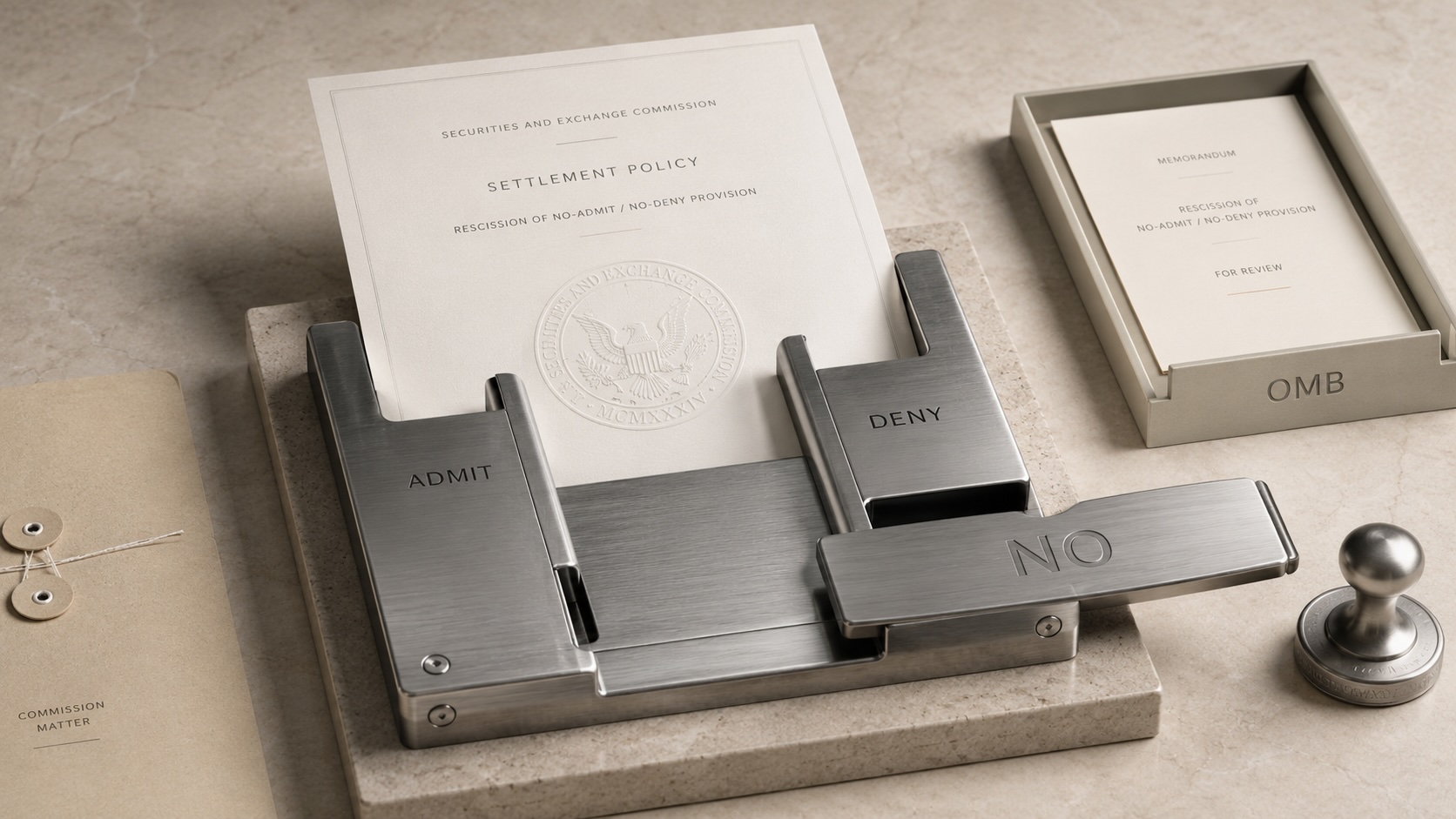
The White House OMB received the SEC’s May 8 plan to rescind its decades-old no-admit/no-deny settlement policy after criticism from Elon Musk and Mark Cuban.
The Securities and Exchange Commission has submitted a plan to rescind its no-admit/no-deny settlement policy, and the White House Office of Management and Budget received the proposal on May 8. The proposal follows public criticism of the policy by figures including Elon Musk and Mark Cuban.
The policy, used by the SEC for more than 50 years, lets companies and individuals settle enforcement actions without admitting or denying wrongdoing. Under the practice, parties who publicly disputed the agency’s findings risked voiding their settlements. The Justice Department and most other federal agencies do not require identical language in settlements.
The filing posted on a federal website did not include substantive details about the scope of the proposed change. The SEC rejected a petition seeking alteration of the policy in 2024, but agency officials have argued that rescinding the requirement would give the commission more flexibility during settlement negotiations.
An SEC spokesperson wrote in a statement that removing the requirement would align the commission with most federal agencies and could “give the commission more flexibility in settling enforcement actions — conserving resources, providing certainty and potentially expediting the return of money to injured investors.”
Critics contend the provision limits defendants’ ability to dispute government allegations publicly. High-profile targets of SEC enforcement, including Tesla and X owner Elon Musk and investor Mark Cuban, have criticized the policy and supported efforts to end it. Earlier this month Musk agreed to pay $1.5 million to settle SEC allegations tied to his disclosure of a Twitter stake; he did not admit or deny the agency’s charges.
Supporters of the no-admit/no-deny practice say it helps resolve cases more quickly and can speed the return of funds to harmed investors. The SEC has said it would still seek admissions of wrongdoing in some cases when appropriate; the agency indicated in 2013 it would pursue admissions under certain circumstances.
Legal groups have challenged the policy in court. Mark Chenoweth, president of the New Civil Liberties Alliance, which has a petition pending at the Supreme Court, welcomed the OMB filing and warned that partial changes could leave the core issue unresolved. “We’re glad SEC is finally admitting after eight years of NCLA fighting them at every turn that the gag rule is indefensible,” he said, adding that there are ways the agency could take “half measures” that would not fully address the problem.
Under the administration’s regulatory review process, OMB will examine the SEC’s proposal and its potential effects before any change can be finalized. Next steps could include additional internal review, a public comment period, or a formal rescission notice from the SEC.
Tags
Articles by this author