Fed bids $10B for 10-year notes; auction may affect crypto
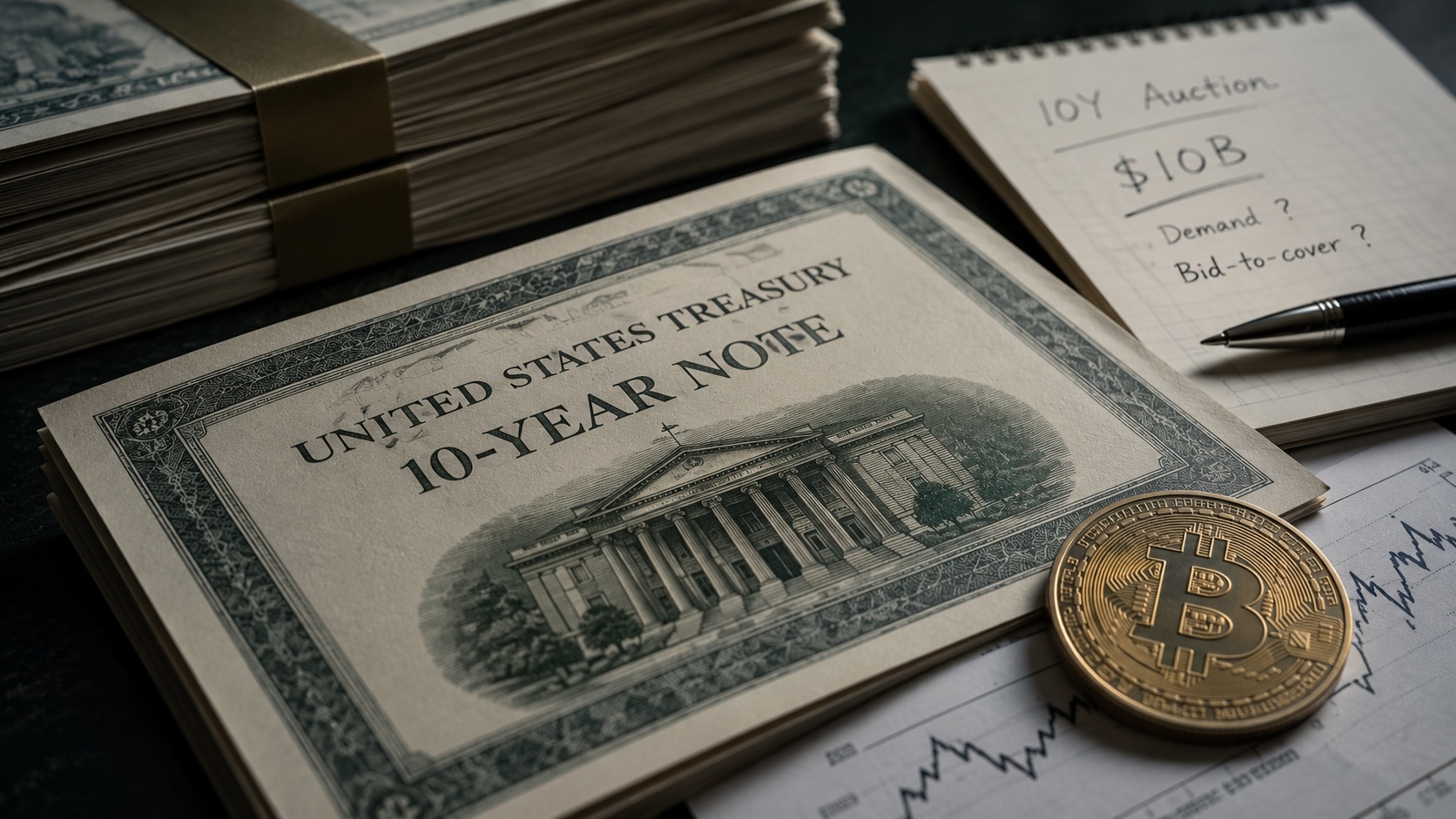
Federal Reserve placed a $10 billion bid in a 10-year Treasury auction that posted a 2.6 bid-to-cover ratio and 71.2% indirect demand.
The Federal Reserve submitted a $10 billion bid in the most recent 10-year Treasury note auction. The auction reported a 2.6 bid-to-cover ratio and 71.2% indirect demand.
The sale was part of the U.S. Treasury’s regular debt issuance schedule. Auction results include the high yield, coupon rate and a breakdown of bidders by category. Indirect demand is typically provided by foreign central banks and large institutional buyers.
A bid-to-cover ratio of 2.6 means investors offered $2.60 in bids for every $1 of notes on offer. Market participants use the ratio as a quick measure of demand: higher ratios are associated with stronger investor appetite, while lower ratios are associated with weaker appetite.
The 10-year Treasury yield is a widely used benchmark across financial markets. It influences mortgage rates, corporate borrowing costs and the pricing of risk assets. Auction outcomes are one input to the yield because they show whether large buyers are willing to buy government debt at current prices.
Real yields, which adjust Treasury yields for inflation, are used when comparing bonds with non-yielding assets such as Bitcoin. When real yields rise, the return on government debt increases relative to assets that do not pay interest. When real yields fall, that relative return decreases.
The next scheduled 10-year note auction is set for May 15, 2026. Investors and analysts will continue to track the bid-to-cover ratio, indirect demand and reported high yields in future auctions to monitor demand for U.S. government debt.
Tags
Articles by this author