S&P 500 tops 7,500 on AI gains despite geopolitical risk
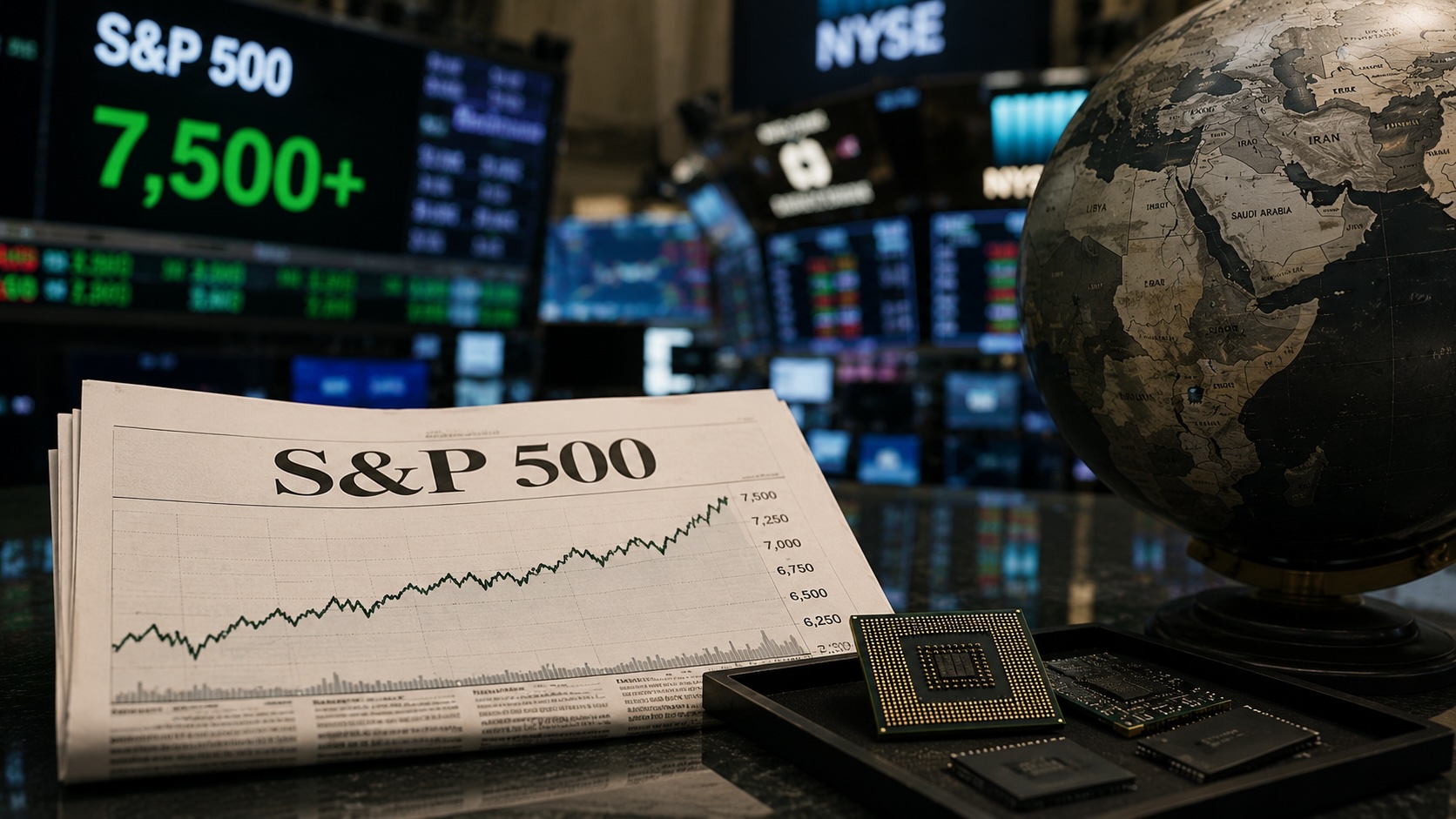
S&P 500 surpassed 7,500 for the first time as chipmaker gains and large AI-related tech investment outweighed market concerns over the Iran conflict and the Strait of Hormuz closure.
The S&P 500 crossed 7,500 for the first time in 2026 as gains from chipmakers and heavy capital spending by large technology firms tied to artificial intelligence pushed the index to a new high. Strong first-quarter results from AI-related companies contributed to the advance.
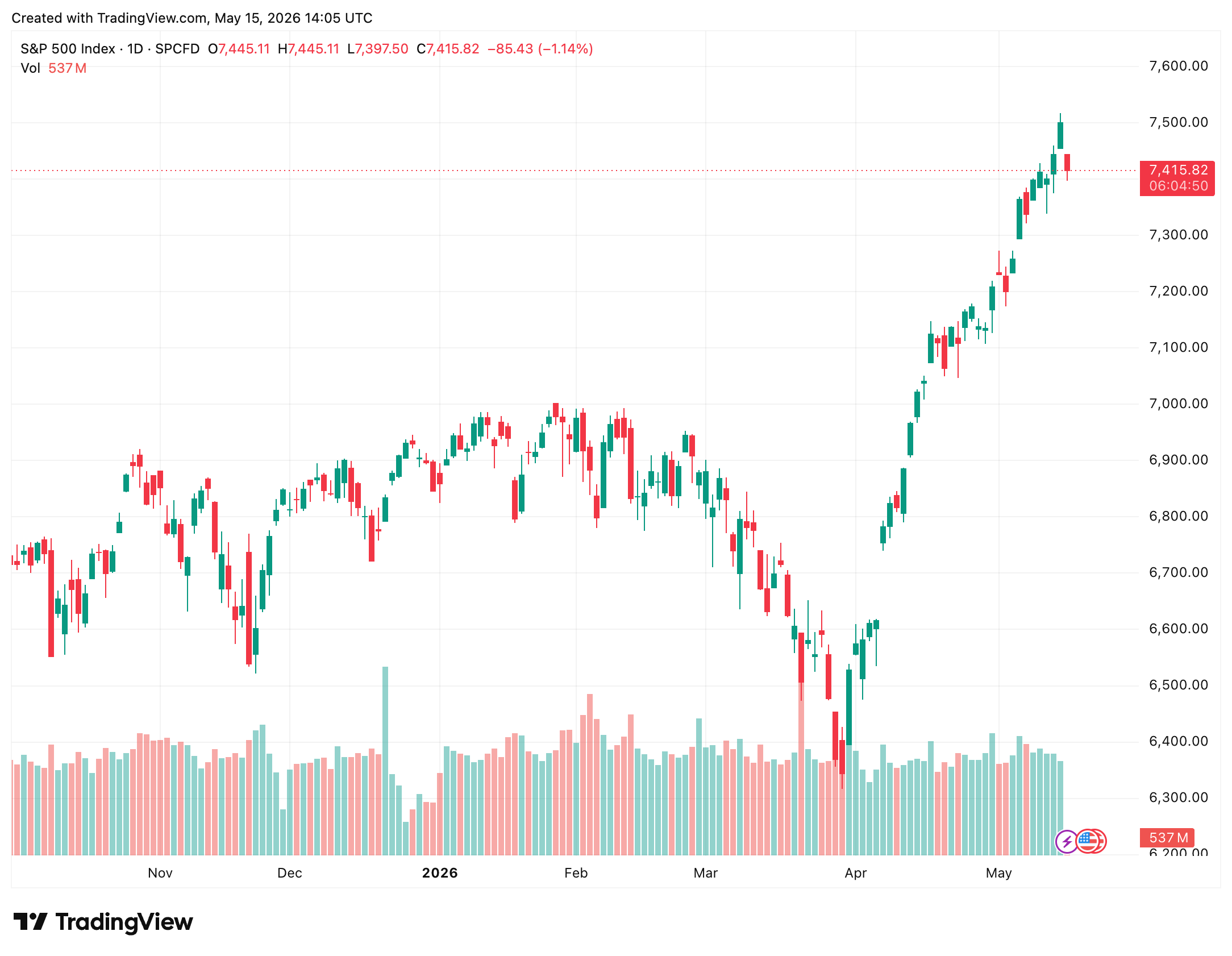
At the launch of ChatGPT on Nov. 30, 2022, the S&P 500 stood at 4,080. The index has risen roughly 85% since then, through the current phase of generative AI investment and deployment.
The market climbed to the milestone despite a 9% dip in February and March and heightened geopolitical tensions linked to the Iran conflict and the closure of the Strait of Hormuz. Inflation hit a three-year high in April, and trading markets assigned about a 37% probability of further Federal Reserve rate hikes.
Chipmakers led the recent advance, with Nvidia extending a multi-day run of gains. A broad set of AI players reported solid first-quarter earnings, which investors treated as evidence of continuing revenue growth in the sector.
Four large technology firms-Alphabet, Microsoft, Meta and Amazon-are forecasting increased capital expenditure. Company forecasts and industry estimates put combined spending by those firms at about $670 billion this year and near $800 billion in 2027.
The AI buildout is increasing demand for physical infrastructure. Data center construction and related projects have expanded, supporting contractors, equipment suppliers and energy providers. Construction megaproject activity rose more than 21% in the first 10 months of 2025, and data center projects grew about 45.5% over the same period.
Energy shares have risen on concerns about supply disruptions tied to the Strait of Hormuz closure and on long-term power needs for data centers. The Vanguard Energy Index Fund ETF Shares has climbed roughly 30% year to date. Infrastructure-focused funds have posted comparable gains, with the iShares U.S. Infrastructure ETF up about 30% over the past year.
Companies in construction and energy are using AI to improve project scheduling and manage energy consumption. Increased demand for cooling, power and storage capacity for data centers is driving orders for physical equipment and site work.
Valuation metrics remain elevated for some large AI-focused companies. Tesla, often included among high-growth technology names, shows a price-to-earnings ratio near 317x. The largest technology firms account for a substantial share of the S&P 500’s market capitalization-roughly 34.8%—concentrating the index’s performance in a small group of companies.
Whether the S&P 500 reaches further milestones will depend on future earnings from major AI-related firms, the pace of data center and infrastructure demand, and macroeconomic factors including inflation and interest-rate policy.
Tags
Articles by this author