Clive Davis recalls CBS firing, Whitney discovery

At the MUSQ Amplify Music Investment Summit in New York, 94-year-old Clive Davis told his son Fred he was fired from CBS in 1973 and described discovering Whitney Houston.
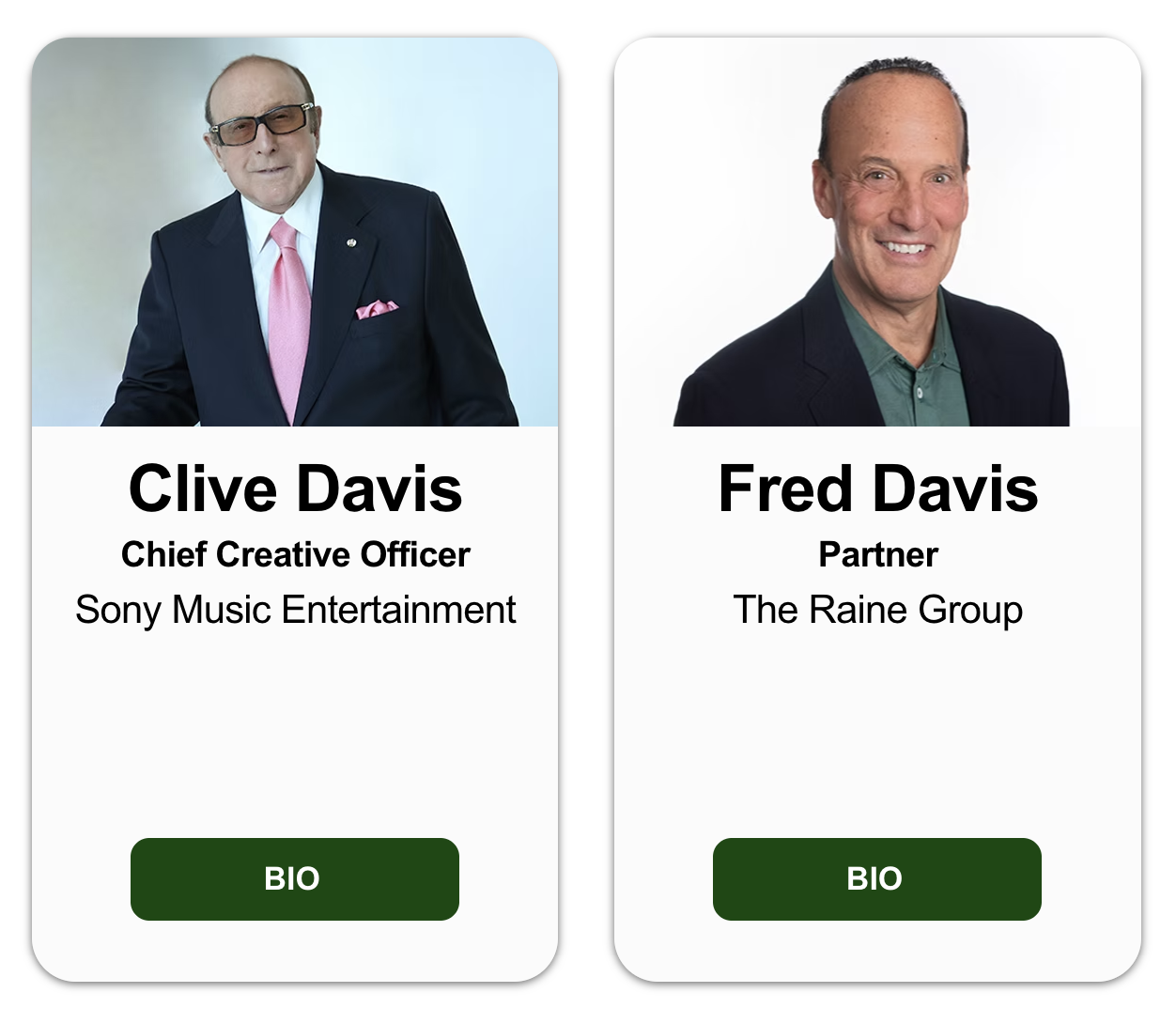
Clive Davis spoke with his son Fred onstage Friday at Virgin Hotels New York during the inaugural MUSQ Amplify Music Investment Summit, a joint presentation by the MUSQ Global Music Industry Index ETF and Mondo.NYC. The 94-year-old music executive and Fred Davis, a partner at The Raine Group, conducted the first public interview between father and son while an image montage of artists from Davis’s career played behind them.
Davis revisited his 1973 departure from CBS. He recounted that a Columbia Records executive had operated a secret invoice scheme and that a lawyer for that executive accused industrywide improper radio payment practices. A newly appointed CBS president separated the network from its record division and removed Davis from his post. After an investigation cleared him, CBS issued a $1 million check for future mail-order rights to Arista Records, the label Davis had founded. He described the compensation as a measure of vindication while noting the episode left a lasting personal impact.
Fred asked who influenced Davis’s career. Davis credited his mother for urging him to mix with people from all backgrounds rather than focus only on books. That guidance factored into his decision to leave the Rosenman Law Firm and join Columbia Records despite colleagues’ warnings that he would not fit the record business.
On artist discovery, Davis described hearing Whitney Houston for the first time at Sweetwater’s Club on the Upper West Side. The song was “Greatest Love of All,” which Davis had commissioned for a Muhammad Ali film. He recalled a strong physical reaction when he heard her voice and negotiated a key man clause in her contract that linked her deal to his continued presence at the label.
Davis also recounted working with Bruce Springsteen. He described advising Springsteen on stage movement during a rehearsal at Max’s Kansas City and later attending a Bottom Line performance with the E Street Band that Davis viewed as a turning point for Springsteen as a live performer. After that show, Springsteen reportedly asked whether he had done enough onstage.
Other moments Davis highlighted included Aretha Franklin’s rendition of “(You Make Me Feel Like) A Natural Woman” at the Kennedy Center for Carole King, where Franklin removed her fur coat and finished to a standing ovation, and the 1999 revival of Carlos Santana’s career with “Smooth.” Davis said he faced skepticism about releasing “Smooth” and previewed it at his pre-Grammy party, where a strong audience reaction helped spur radio acceptance. Davis noted that the pre-Grammy party began in 1975 and continued to draw artists and industry attention.
When asked for a favorite song he had worked on, Davis named “The Greatest Love of All.” The session ended with a standing ovation from the room.
The summit included discussion of music as an investable sector; MUSQ holds music-industry companies including Universal Music Group, Warner Music Group, Spotify and Live Nation. For much of the afternoon, however, the onstage exchange focused on personal recollections and mentorship across six decades of the music business.
Tags
Articles by this author