Data centers, AI drive $1.4T U.S. grid buildout
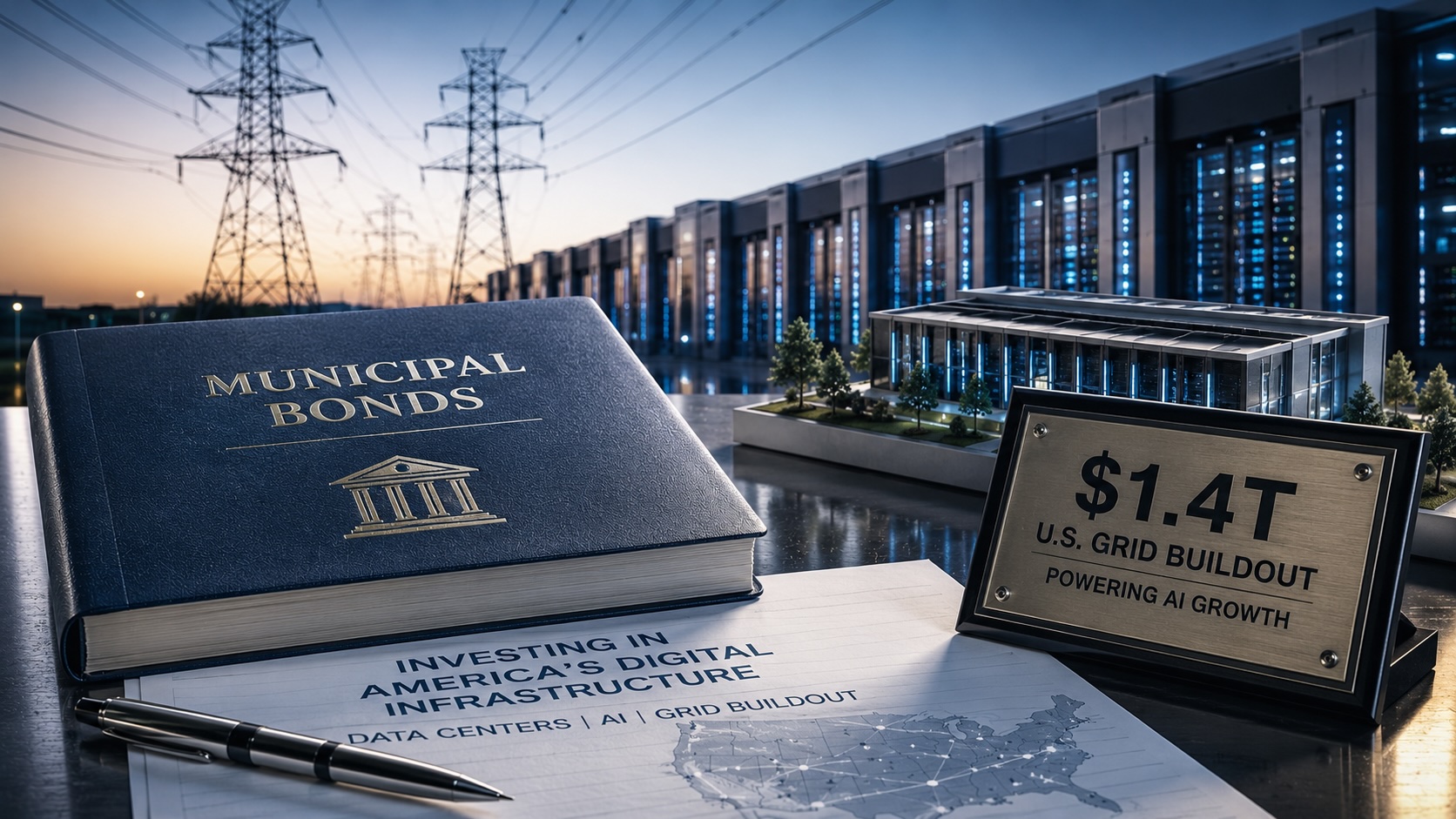
AI demand from data centers is prompting $1.4 trillion in U.S. grid spending over five years; municipal bonds are a growing source of financing.
A recent industry report found AI-driven demand from data centers will push about $1.4 trillion in capital spending on the U.S. electric grid over the next five years, and municipal bonds are becoming a primary financing channel.
The report aggregated plans from 51 investor-owned utilities. Combined capital spending estimates rose more than 20% from a year earlier. More than 30 of those utilities listed data centers as a specific driver of spending through 2030. Nearly as many utilities are allocating funds to harden the grid against severe weather and to replace aging equipment. Rising material and labor costs and supply chain delays are increasing project budgets.
Large-scale artificial intelligence workloads and hyperscale data centers have compressed roughly a decade of expected upgrades into about five years. That compression is creating urgent demand for new transmission lines, substations and distribution upgrades in regions with clusters of tech campuses and cloud facilities.
Utilities finance investment mainly with debt-about 65% debt and 35% equity-so the surge in planned spending implies hundreds of billions of dollars in new debt issuance. A significant portion of that borrowing is entering the municipal bond market because municipal debt typically offers lower after-tax financing costs for borrowers.
Issuers are structuring municipal debt for both investment-grade and project-specific, below-investment-grade issues tied to infrastructure work. Market value of outstanding industrial revenue bonds has nearly doubled since 2022, and new issuance is shifting toward infrastructure projects.
Within the high-yield municipal index, nearly half of industrial development revenue bond exposure is rated below investment grade or is unrated, a segment that carries higher yields to compensate for credit risk. Those yields are drawing investor interest in tax-advantaged income.
Electricity prices rose 4.6% year over year as of March, compared with 3.3% for overall consumer prices. One state has frozen electricity rates for regulated utilities through 2029, and another state has regulators holding statewide hearings on affordability. Utilities, regulators and large technology companies are negotiating how to allocate the costs of grid expansions tied to data centers. Several major tech firms have pledged to pay more for electricity and to limit pass-through of costs to consumers.
Project-based municipal bonds carry credit and interest-rate risks and can fall below investment grade. The growing use of muni financing is changing the size and credit profile of the municipal market and is connected to ongoing debates over affordability and who will bear the costs of electrification and data center growth.
Tags
Articles by this author