Tokenized gold trades carry lower premiums than bullion

Transaction-level data shows tokenized gold trades generally have lower premiums than physical bullion, largely due to storage, shipping and retail distribution costs.
New transaction-level premium data shows tokenized gold trades generally carried lower premiums than purchases of physical bullion. The difference stemmed mainly from storage, shipping and retail distribution costs embedded in physical sales.
The dataset compared premiums charged to buyers and sellers across multiple bullion dealers and tokenized-gold platforms over recent months. Consumers buying minted coins or delivered bars faced higher up-front markups than users transacting tokenized claims on blockchain platforms. The gap was largest for smaller retail purchases, where dealer minimums, assay and packaging raised the effective cost per gram.
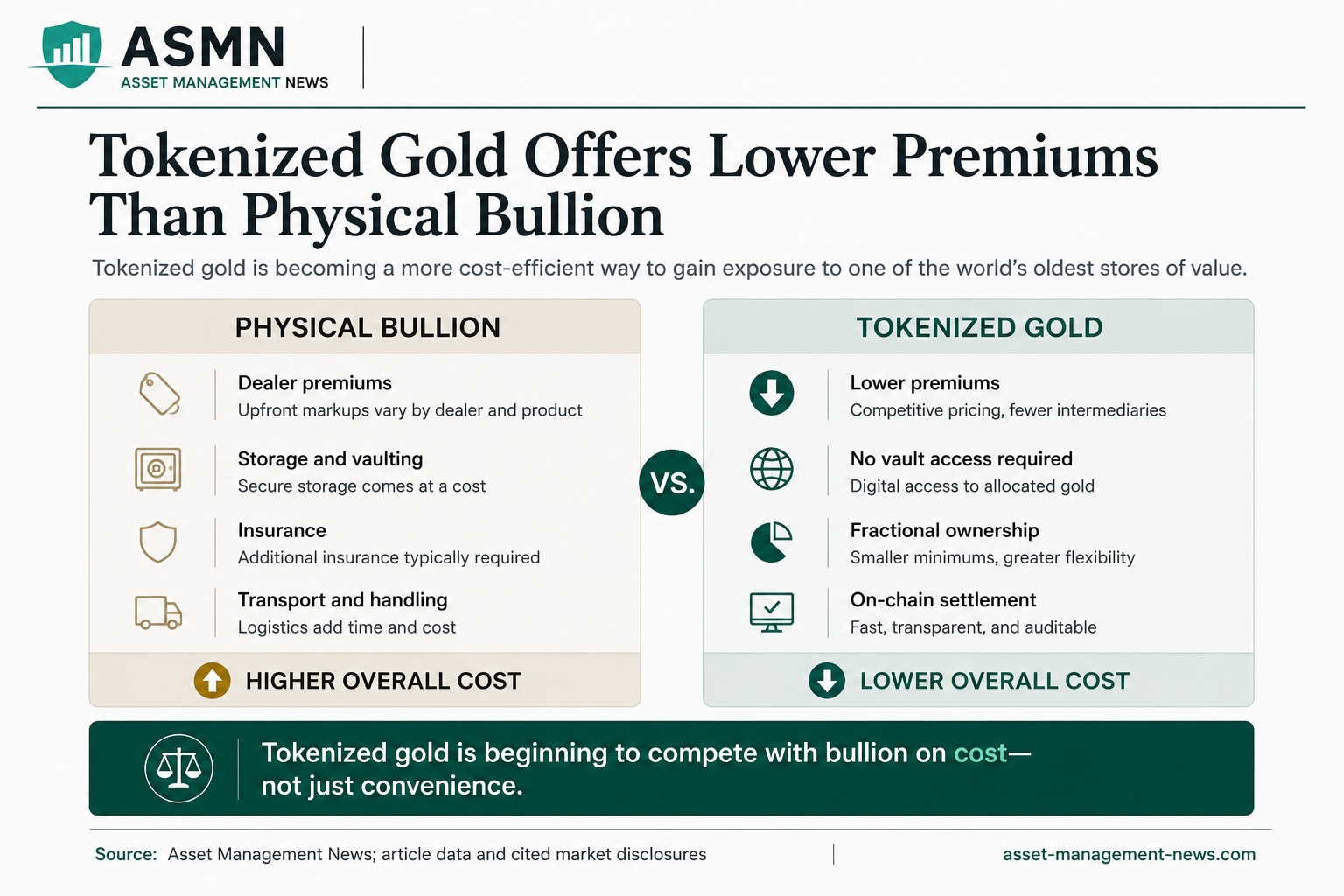
The analysis covered spot-based buys and sells on several commercial platforms and at retail counters. Physical bullion premiums included minting, insurance, transport and dealer retail margins. Tokenized premiums reflected platform fees, custody charges and on-chain transaction costs.
Where tokenized offerings allowed instant matching and fractional ownership, buyers typically avoided discrete fees tied to physical handling and delivery. On the sell side, tokenized markets showed tighter bid-ask spreads in higher-liquidity pools, which reduced realized costs compared with shipping bars back to a dealer.
Trades under a few thousand dollars equivalent exposed the widest disparity. Large-lot buyers sourcing wholesale bars saw the difference narrow. Premiums also varied across jurisdictions and between allocated and unallocated tokenized products: allocated tokens backed one-to-one by segregated bars tended to track physical spot more closely than pooled or unallocated schemes, which priced in different liquidity and counterparty considerations.
Settlement and redemption mechanics were important determinants of cost. Physical delivery required order processing, secure transport and insurance certificates. Tokenized trades settled on distributed ledgers and relied on custody arrangements instead of physical handling. Some token issuers set minimum redemption sizes or required advance notice for physical delivery; those conditions changed effective pricing when buyers converted digital claims into metal.
Fee transparency differed between channels. Bullion dealers listed premiums per coin or bar and added shipping and insurance costs at checkout. Tokenized platforms published trading and custody fees and some passed blockchain transaction costs to users. When all fees and frictions were accounted for, the net premium gap narrowed in the sample but did not disappear. Counterparties with deep liquidity and low custody charges produced tokenized transactions closest in total cost to institutional physical trades.
According to a market analyst, “Nominal fees do not capture handling, minimums and settlement terms, and redemption rules can change the effective cost for tokenized holdings.” Traders pointed to platform reputation and auditing of reserves as factors that affected buyers’ willingness to accept lower tokenized premiums.
Regulatory treatment, audit practices and use of third-party custodians influenced trust and therefore effective premiums. If tokenized products scale and lower per-transaction overhead, the premium gap for retail-sized investments may compress. Persistent redemption friction or counterparty concerns could maintain a price differential for buyers seeking physical possession.
Articles by this author