
Strait of Hormuz closed as U.S.-Iran deadlock persists
U.S.-Iran deadlock and attacks have left Iran controlling the Strait of Hormuz and a U.S. blockade restricting more than 1,550 commercial vessels; markets put May 15 reopening at 0.5%.
A ceasefire brokered by Pakistan on April 8 has frayed as both sides continued to violate the agreement. Iranian forces have conducted more than ten attacks on U.S. military assets in the Strait of Hormuz, and U.S. forces have struck Iranian-flagged tankers and missile sites in response. The Pentagon’s May 5 assessment warned the diplomatic impasse raises the risk of escalation beyond minor clashes. President Donald Trump rejected a diplomatic proposal from Iran, prolonging the standoff.
Iranian units maintain close control of the strait while U.S. operations include a blockade that officials say affects over 1,550 commercial vessels attempting to transit the corridor. Vessel movements through the narrow chokepoint remain limited compared with normal traffic levels, and shipping and insurance activity has been constrained.
Prediction market prices reflect the security situation. The market for traffic returning to normal by May 15 is priced at 0.5% YES, down from 1% a day earlier. A separate contract for traffic returning to normal by May 31 shows an 8.5% YES probability, down from about 16% over the past week. Odds fell after recent attacks and the continued diplomatic deadlock.
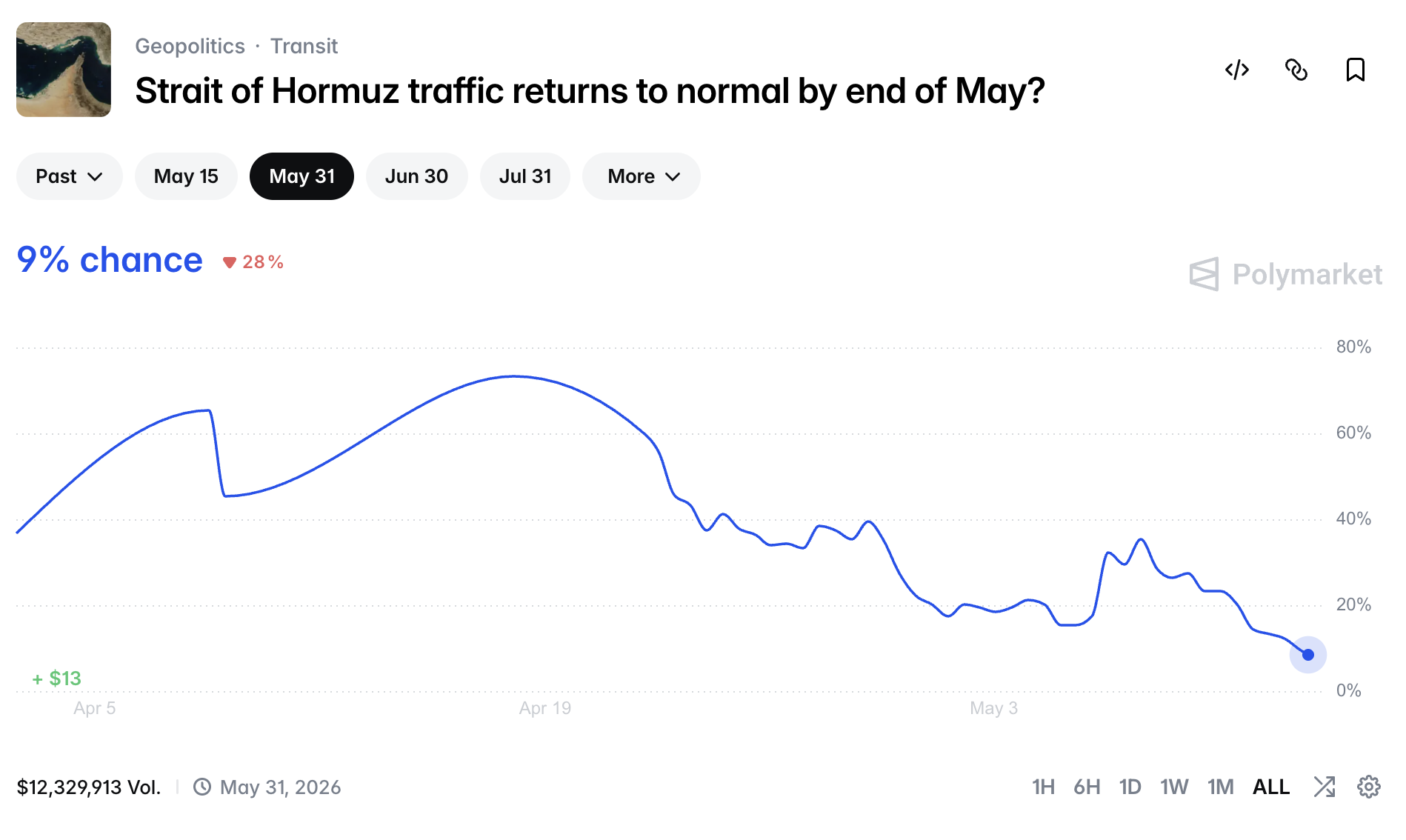
Observers note several developments to watch in the coming days. Public statements or policy changes from President Trump, Iranian leaders, or U.S. Central Command could affect the prospect of de-escalation. Any shifts in the Pentagon’s posture or actions by international organizations such as the United Nations could influence conditions on the water and market expectations.
The Strait of Hormuz connects the Persian Gulf to the Gulf of Oman and is a major route for commercial shipping, including oil transport. The approaching May 15 date will be an early test of whether military exchanges abate enough to allow a return to routine shipping.
Articles by this author









