Physical AI and hardware push robotics to scale in 2026
Physical AI and rising hardware spending are scaling robotics in 2026. Teradyne Q1 revenue rose 87% to $1.28B; ABB reported $11.3B in orders; Symbotic revenue rose 23%.
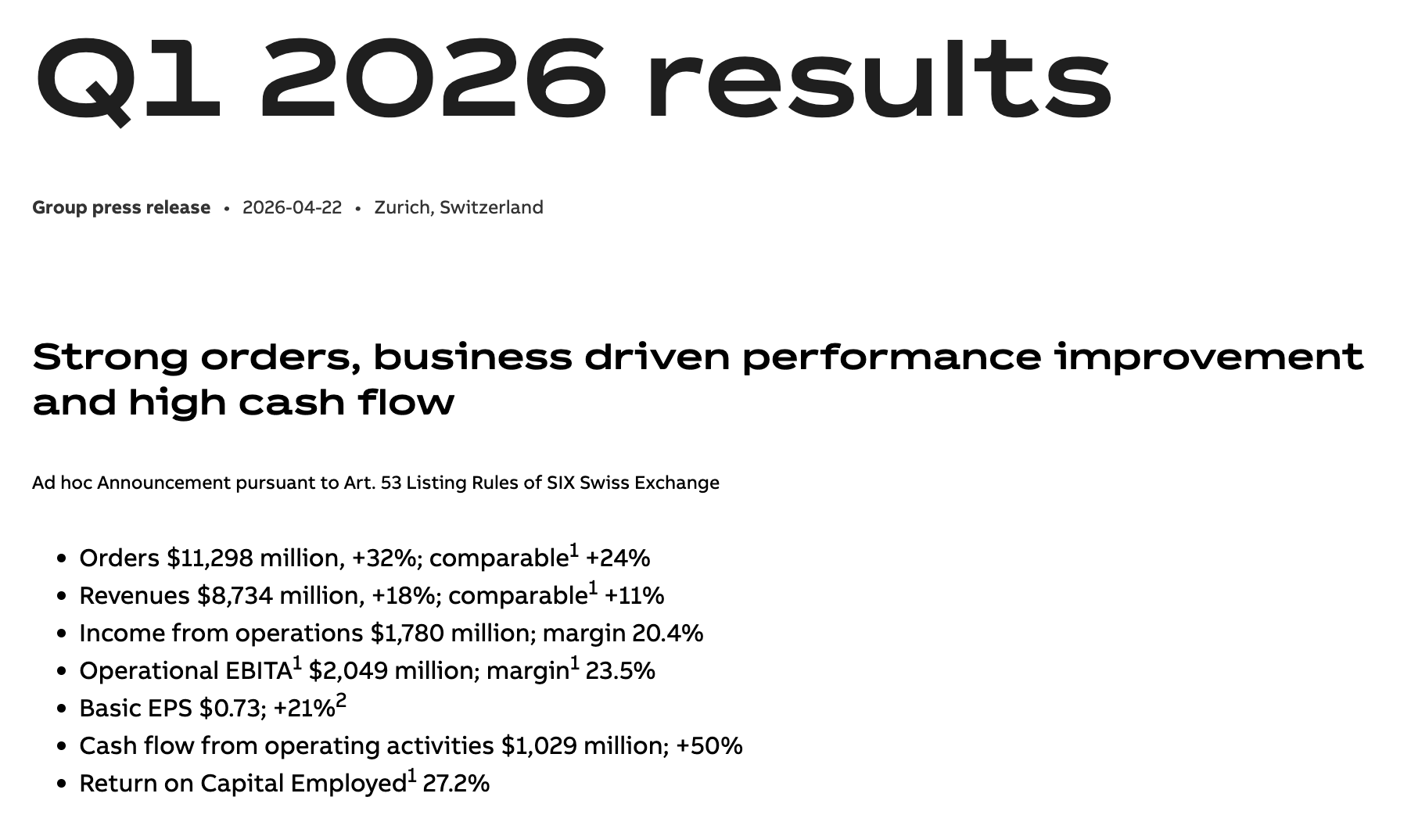
Physical AI models that give machines real-time spatial awareness and motor control, together with higher hardware spending, coincided with strong spring 2026 corporate results in the robotics sector. Teradyne reported Q1 2026 revenue of $1.28 billion, up 87% year over year. ABB recorded $11.3 billion in orders for Q1 2026, a 24% increase from the same quarter a year earlier, and reported an 11% rise in revenues for the quarter. Symbotic reported revenue of $676 million for its most recent quarter, a 23% increase, and said the total number of its automated systems in operation reached 70. Fanuc closed its fiscal year in April 2026 with earnings up nearly 13% year over year.
Companies developing what are described as robot foundation models have released and announced several products this year. NVIDIA plans to follow its GR00T N1.7 model with a next-generation GR00T N2 later in 2026. Smaller firms announced platforms intended for licensing, including Generalist AI’s GEN-1 and AGIBOT’s Embodied Foundation Model. Other firms are building large datasets and platform services for licensing to robotics manufacturers.
Hardware suppliers reported higher demand tied to AI and automation. Teradyne’s revenue gain was driven largely by demand for chip testing related to AI applications. Edge-computing chips from companies such as Ambarella are being used to process sensor data locally to reduce latency. Machine vision products from Cognex and Keyence provide three-dimensional sensing used for spatial awareness. Precision motion components from Harmonic Drive Systems and Nabtesco provide low-backlash gearing for fine movement, while microcontrollers from Microchip handle the real-time control tasks in robotic systems.
Corporations undertaking reshoring and new facility construction are ordering automated equipment as part of capital expenditure plans. ABB’s order and revenue growth reflect industrial customers placing large equipment orders. Symbotic’s reported increase in deployed systems indicates continued installations of warehouse automation. Fanuc’s full-year earnings increase reflects demand for factory automation equipment during its fiscal year.
Market tracking groups and industry indexes that follow robotics and automation report a larger addressable market as physical AI is applied in logistics, manufacturing and other sectors. Spring 2026 earnings reports from manufacturers and component suppliers show revenue gains linked to AI-driven automation investments and higher capital spending across the supply chain.
Tags
Articles by this author