
Keel Infrastructure posts $145M Q1 loss, shifts to AI
Keel Infrastructure reported a $145 million Q1 2026 net loss as it exits Bitcoin mining, rebrands and builds a 2.2 GW AI and high-performance computing data-center pipeline.
Keel Infrastructure, formerly Bitfarms, posted a $145 million net loss for the first quarter of 2026 as it exited Bitcoin mining and completed a rebrand. The company reported the result reflected accelerated shutdowns of mining operations and costs tied to the transition.
Revenue declined 23% year over year to $37 million. Keel recorded $41 million in fair value changes on digital assets and $22 million in charges to extinguish a credit facility. General and administrative expenses rose 52% to $27 million, driven primarily by professional fees related to the rebrand and restructuring.
Keel completed its rebrand on April 1, 2026, and has exited its Latin American mining operations. Management is focusing development on AI and high-performance computing capacity in strategic U.S. and Québec locations. The company secured zoning approvals on April 30 to expand AI data centers at former mining sites.
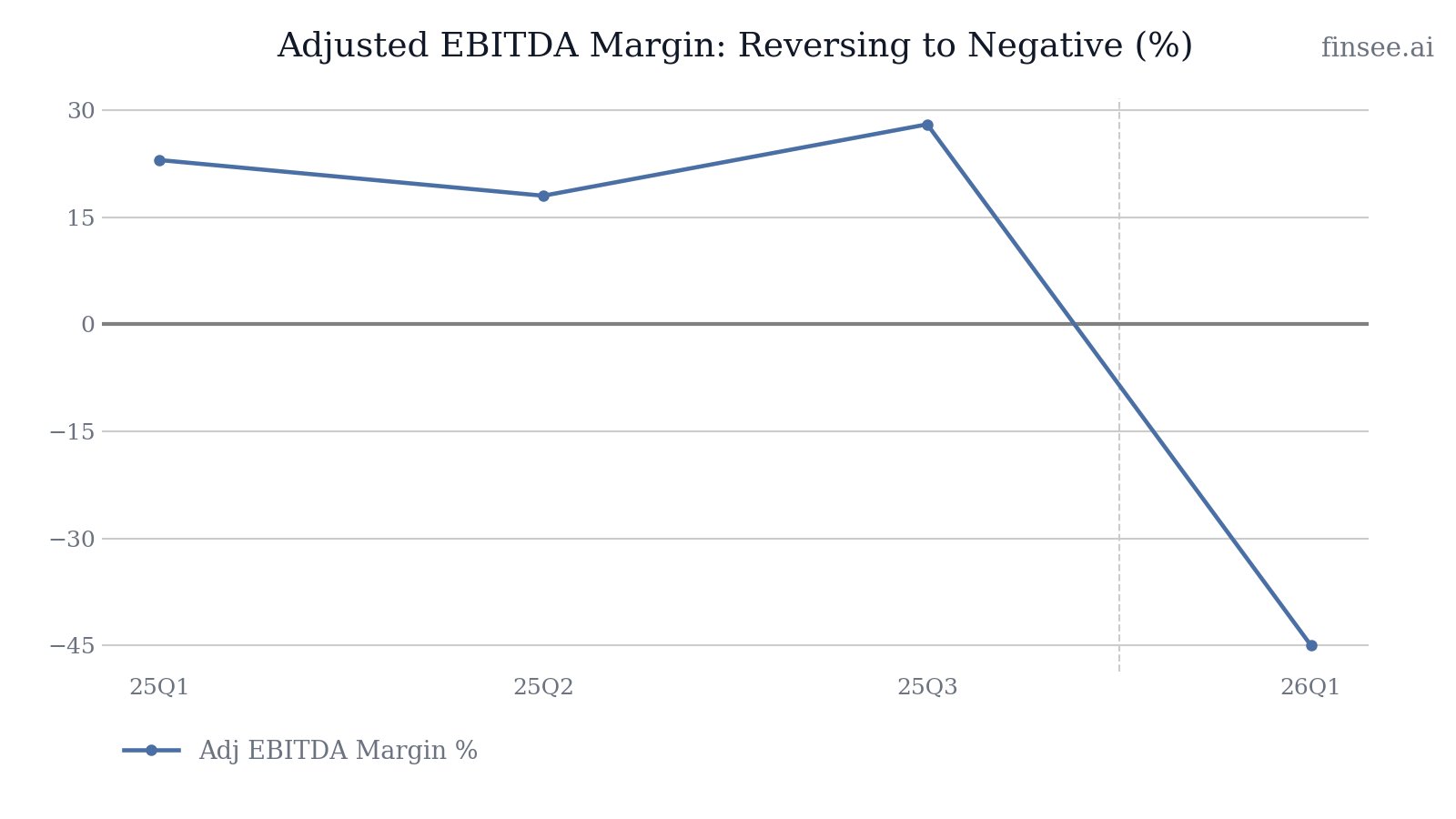
The company is building a 2.2 gigawatt development pipeline for AI and HPC data centers. Total liquidity was reported at $533 million, consisting of $336 million in cash and $197 million in unencumbered Bitcoin. Keel noted that none of its Bitcoin holdings are pledged as collateral on loans.
Keel highlighted that the $41 million fair value change on digital assets reflected market price movements rather than operating results. The $22 million charge to extinguish a credit facility and higher one-time professional fees were also cited as drivers of the quarter’s loss.
Shares rose about 9% on the day of the earnings release, closing at $4.34, and were up roughly 8% year to date. Management described the unencumbered Bitcoin holdings as a potential source of funding for the AI buildout or as retained exposure to Bitcoin price appreciation.
Next steps include advancing the 2.2 GW development pipeline and converting former mining sites into data-center capacity while managing liquidity and digital-asset holdings to support the buildout.
Articles by this author









