US Treasuries rally after US-Iran deal lowers oil risk
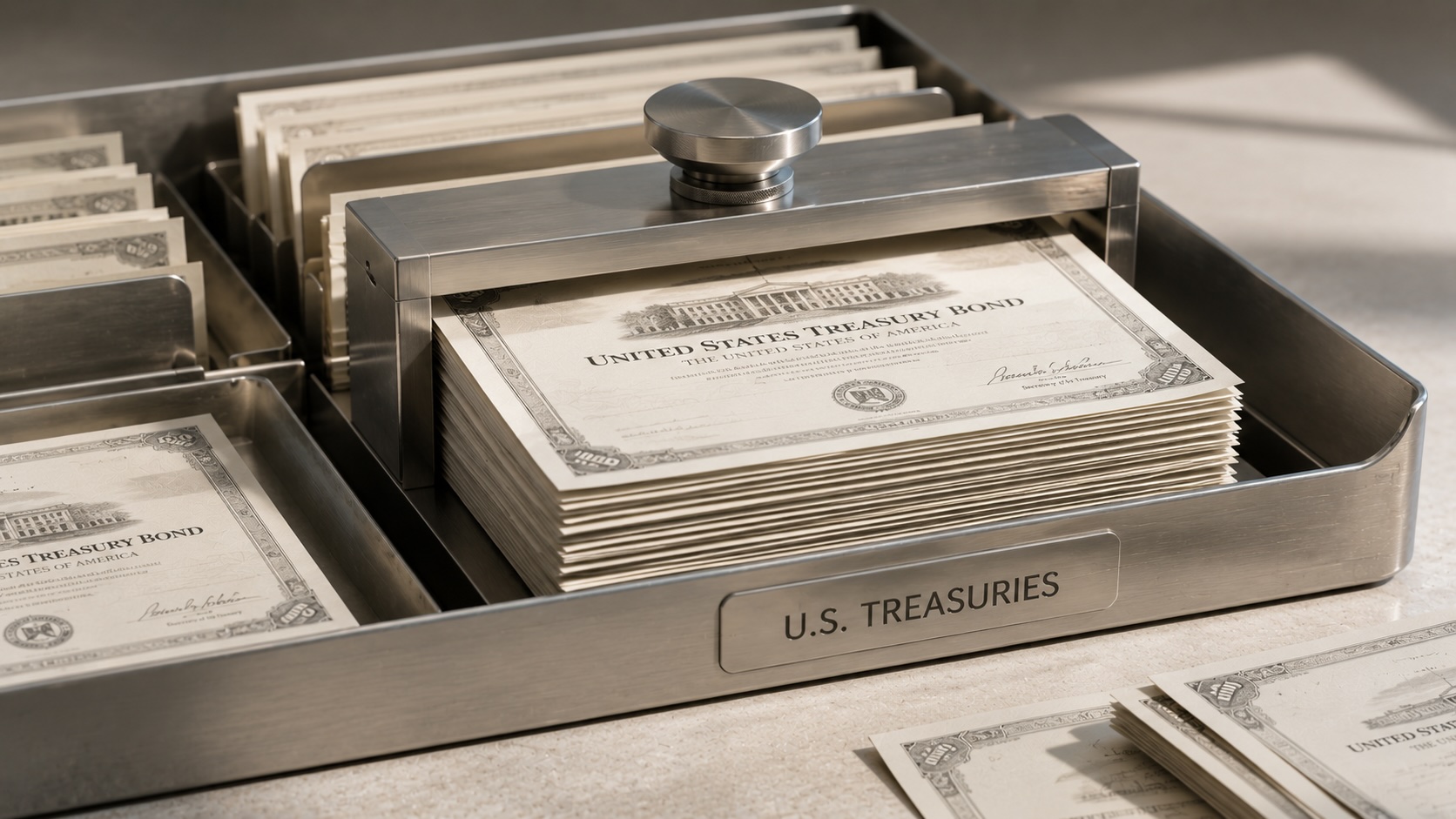
US Treasuries rallied after the US and Iran agreed to end hostilities and reopen the Strait of Hormuz; Brent fell over 4%, cutting December Fed hike odds to about 60%.
US Treasuries rose across the curve on Monday after the United States and Iran reached an agreement to end hostilities and reopen the Strait of Hormuz. Brent crude fell more than 4%, and traders reduced the probability of a Federal Reserve rate increase in December to roughly 60%.
The Strait of Hormuz handles about one-fifth of global oil shipments. The prospect of resumed flows eased near-term energy pressure and reduced inflation concerns that had pushed investors toward higher interest-rate expectations. Shorter-dated Treasuries, which react most to monetary policy shifts, led the rally.
Market pricing in interest-rate swaps moved sharply: the chance of a quarter-point Fed increase by December fell to about 60% from roughly 80% at the end of last week. Federal Reserve policymakers are expected to leave the target range at 3.5% to 3.75% at their meeting this week.
Yields moved lower across maturities. Two-year Treasury yields dropped about six basis points to near 4.02%, the 10-year yield fell roughly five basis points to about 4.43%, and 30-year yields slipped to their lowest level in more than a month.
The effect was not limited to US debt. Government bond yields in Australia, New Zealand and Japan declined as investors adjusted inflation expectations. Treasury yields are used as a benchmark for global borrowing costs and influence rates on corporate debt, equities and emerging-market assets.
Market participants pointed to historical links between energy prices and bond yields. Tomo Kinoshita, global market strategist at Invesco Asset Management Japan, observed, “Previous patterns suggest a sharp decline in oil prices can translate into lower long-term Treasury yields.” Matthew Haupt, a portfolio manager at Wilson Asset Management, added that some investors are unwinding bearish positions in fixed-income markets as immediate inflation pressures ease.
Caution persisted among traders. Washington and Tehran offered different interpretations of parts of the agreement after it was announced, and the Strait of Hormuz is not expected to reopen until later this week. Andrew Ticehurst, a strategist at Nomura, warned uncertainty will remain until the route is formally reopened. Tai Hui, chief market strategist for Asia Pacific at JPMorgan Asset Management, said the reduced energy risk “may strengthen the case for the central bank to remain on hold while assessing the broader economic impact of recent events.”
Analysts said the agreement removed a near-term inflation risk for markets, while noting that volatility could return if tensions resume or the deal unravels.
Tags
Articles by this author