Robinhood, Adidas and Shake Shack see early World Cup gains

Analysts point to higher trading on Robinhood’s prediction markets, rising Adidas jersey sales and more foot traffic at Shake Shack near World Cup venues.
Analysts identify Robinhood Markets, Adidas and Shake Shack as early beneficiaries of the 2026 FIFA World Cup, citing higher trading volumes, stronger apparel sales and increased foot traffic during the tournament’s opening weeks.
Robinhood’s prediction markets have seen a sharp rise in activity. The platform routes event contracts through Rothera, a CFTC-licensed exchange and clearing house that allows Robinhood to retain the economics of those trades. Truist reported trading in event contracts tracking nearly 40% above its second-quarter forecasts and said June was on course to be Robinhood’s strongest month on record across equities, options and prediction markets. Goldman Sachs raised its price target on Robinhood to $121 and kept a Buy rating, while BTIG began coverage with a Buy rating and a $125 target. Bernstein estimated prediction-market revenue could increase about 286% this year to $586 million. Bernstein analyst Gautam Chhugani wrote, “As the World Cup continues, we can expect Robinhood to gain share,” noting rising retail and institutional interest in prediction markets.
DA Davidson flagged potential gains for Shake Shack, noting that more than 35% of the chain’s U.S.-owned restaurants are within 30 miles of World Cup host-city venues. The firm cited local spending reports and recent guidance adjustments as supporting the view that same-store sales could finish near the top of the company’s updated outlook. DA Davidson reiterated a Buy rating and a $70 price target and pointed to tighter financial oversight under new Chief Financial Officer Michelle Hook as a factor that could influence investor sentiment.
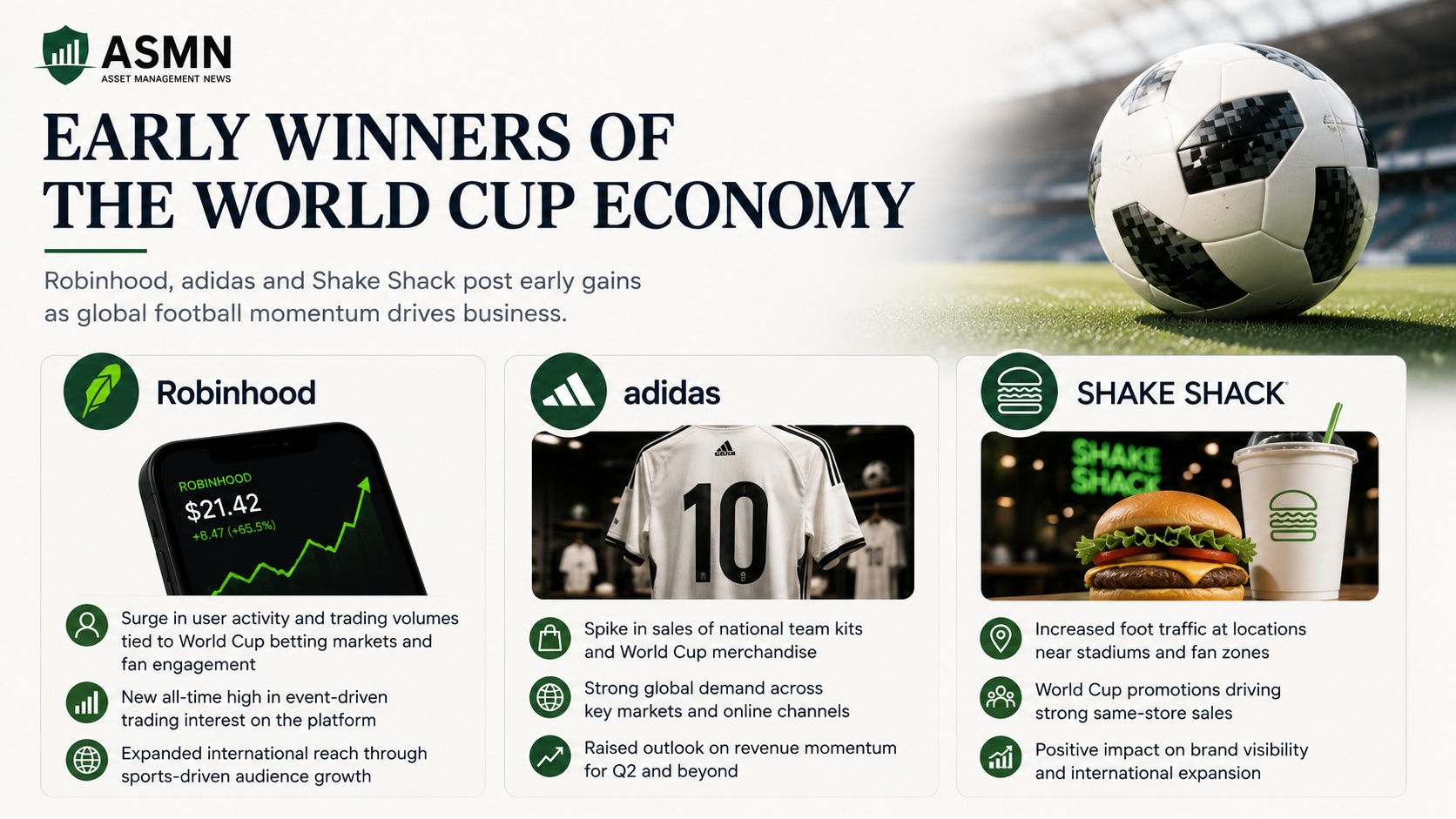
Retail and consumer data show Adidas benefiting from World Cup merchandise demand. Adidas apparel purchases rose about 70% year over year in May and remained elevated through June, largely driven by jersey sales. Foot-traffic analytics indicate U.S. visits to Adidas stores increased roughly 47% during the tournament’s opening week compared with average 2026 levels, while visits to Nike factory outlet stores rose about 11% over the same period. Adidas reported roughly €250 million in World Cup-related revenue in the first quarter. Jefferies reaffirmed a Buy rating and a €190 price target, noting that World Cup-inspired lifestyle collections are drawing a broader set of shoppers.
Brokers and analysts are tracking trading volumes, store visits and local spending to measure the commercial effects of the tournament. They note the full financial impact will become clearer as the World Cup progresses and companies report quarterly results.
Articles by this author