U.S. public debt tops $31 trillion; Interest costs exceed $1T

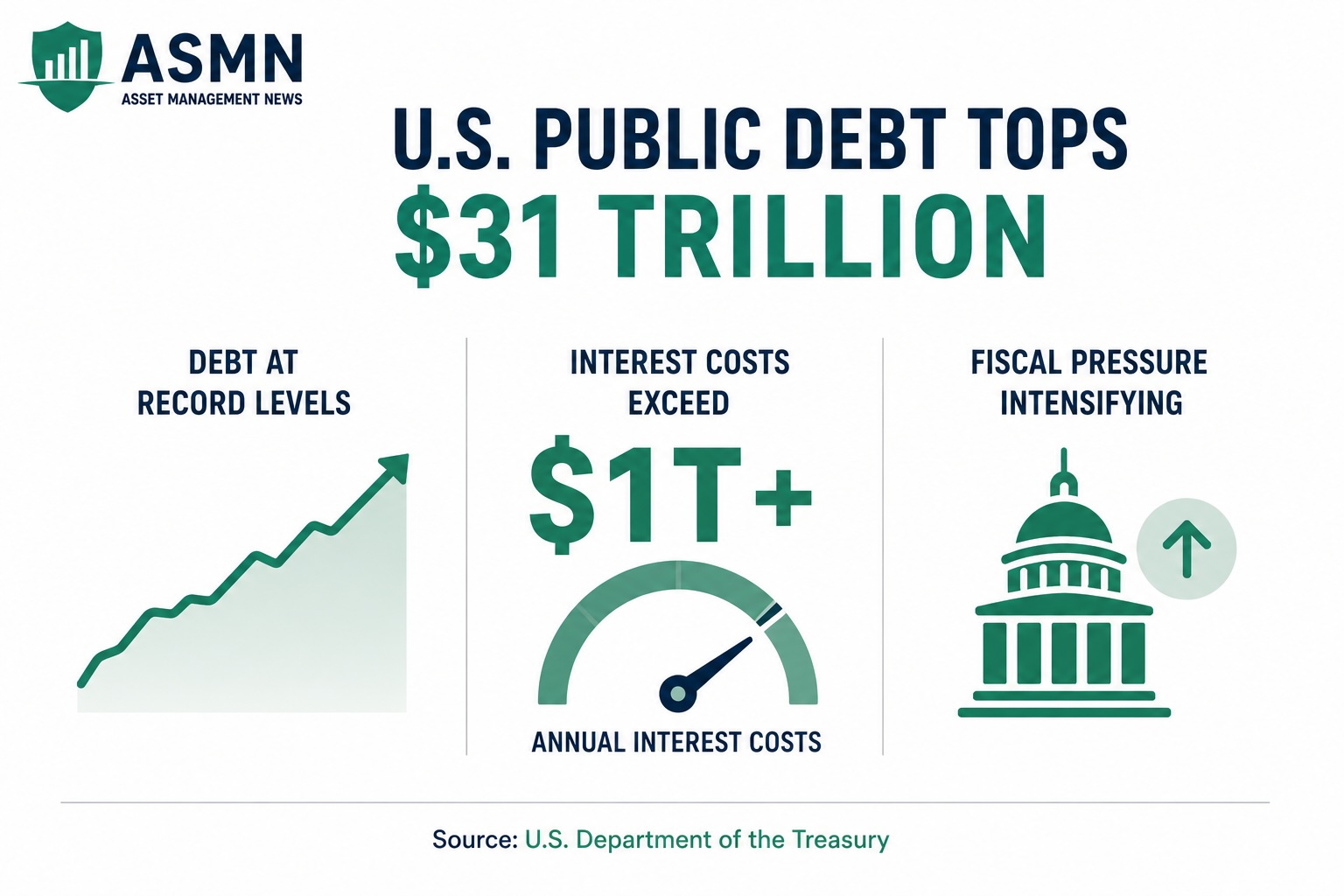
U.S. public debt tops $31 trillion and annual interest costs exceed $1 trillion, RiverFront Investment Group warned, citing long-term yields, core inflation and the dollar as key risks.
RiverFront Investment Group told a government committee and published a follow-up note saying U.S. public debt now exceeds $31 trillion and annual federal interest payments top $1 trillion. The firm said total debt is near 100% of GDP and interest costs have risen to about 3.8% of GDP.
The advisory firm noted that federal interest payments now surpass current defense spending in modern records. RiverFront framed the current borrowing trajectory as unsustainable and identified three market indicators to monitor for signs of growing fiscal stress.
The note set thresholds for those indicators. A sustained rise in long-term Treasury yields, especially a 30-year yield above roughly 6% driven by higher term premia, would raise concern. Persistent core inflation of about 4%–5% or higher for multiple years would signal weakening confidence in fiscal discipline, the firm said. A disorderly drop in the dollar of roughly 15%–20% against a broad currency basket over a short period would indicate a loss of global investor confidence and could trigger capital outflows.
RiverFront also listed factors that reduce the likelihood of an immediate fiscal collapse. The dollar’s status as the global reserve currency creates steady foreign demand for Treasuries. The U.S. economy retains productivity and innovation advantages, and the firm estimated artificial intelligence could raise U.S. productivity by about 0.5%–1.0% over the next five to seven years. The note added that modestly higher growth and inflation, a pattern sometimes called reflation, would lower the real burden of debt over time.
The firm referenced historical examples where large debt burdens declined. After 1946, U.S. debt exceeded 100% of GDP and then fell over subsequent decades through a mix of budget discipline, sustained growth and policies that kept interest rates below inflation. RiverFront described that pattern as roughly 40% fiscal adjustment, 40% growth and 20% financial repression. The note also cited Canada’s fiscal consolidation in the 1990s, when spending cuts and other measures helped bring the budget into surplus by the late 1990s and reduced the debt ratio significantly over a decade.
The note summarized existing policy proposals across the political spectrum and pointed to a Committee for a Responsible Federal Budget framework that would cap deficits and require stricter rules for new spending. The firm quoted Warren Buffett’s remark that he could “end the deficit in five minutes” to illustrate how incentive changes figure in many proposals. RiverFront noted that multiple think tanks have produced plans that, if enacted, estimate a reduction in the debt-to-GDP ratio by at least one-third over 30 years using combinations of spending cuts and revenue increases.
RiverFront warned that delay would raise the cost of future adjustments and cited the Congressional Budget Office projection that, under current law, debt could reach 175% of GDP by 2056. The note also cited research from the IMF and the Federal Reserve that links higher debt ratios with modestly higher long-term interest rates, on the order of a few basis points for each percentage-point increase in the debt-to-GDP ratio.
The firm’s final recommendation was to track the three indicators-long-term yields, core inflation and the dollar-as practical signals that would show rising probability of serious fiscal stress if they deteriorate together.
Tags
Articles by this author