Most investors oppose SEC plan to allow semiannual reports
A CFA Institute survey of more than 2,500 investors found 62% oppose an SEC proposal to let companies switch from quarterly to semiannual reporting.
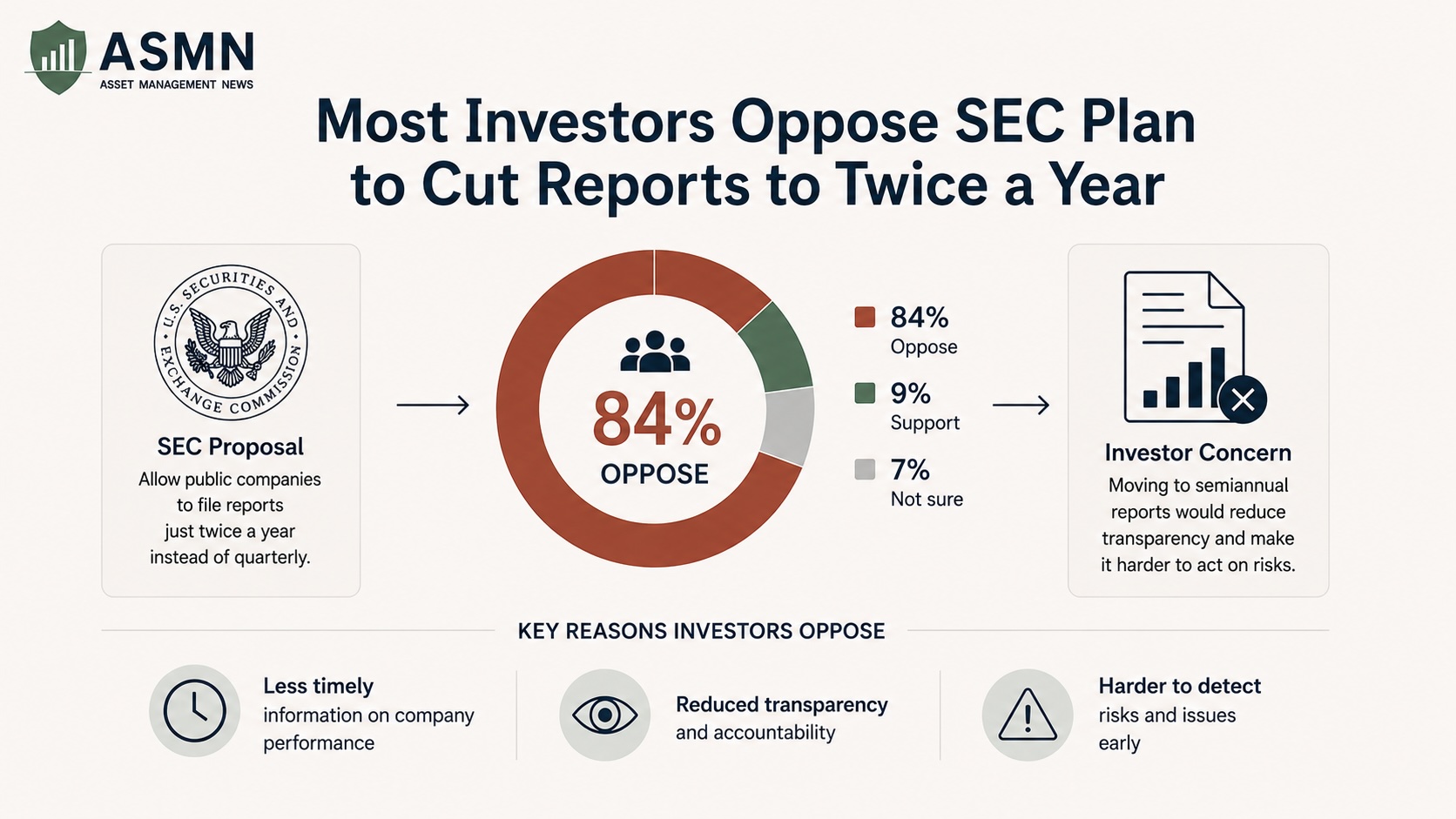
A CFA Institute survey of more than 2,500 investors, conducted before the SEC issued its May 5 proposal, found 62% oppose allowing publicly traded companies to shift from quarterly to semiannual financial reporting.
Respondents were asked directly about replacing quarterly reports with semiannual ones: 49% strongly disagreed and 13% somewhat disagreed, while 19% strongly agreed and 16% somewhat agreed.
When the question focused on applying semiannual reporting only to certain groups — such as smaller firms, non-accelerated filers or emerging growth companies — 42% strongly disagreed and 20% somewhat disagreed. Nine percent strongly agreed and 18% somewhat agreed.
On whether the SEC should continue to allow quarterly reporting even if semiannual reporting became an option, 71% strongly agreed and 11% somewhat agreed. Half of respondents strongly disagreed with letting companies choose their reporting cadence or switch back and forth; 20% somewhat disagreed, 10% strongly agreed and 11% somewhat agreed.
Matthew Winters, senior director of corporate disclosures and information advocacy at the CFA Institute, wrote in a June 10 statement that respondents indicated the benefits of quarterly reporting exceed its costs and that reducing reporting frequency could weaken comparability, increase information asymmetries, reduce transparency and impair market efficiency. The institute also noted most respondents expect many companies would stop issuing quarterly reports if semiannual reporting became optional.
The SEC opened a public comment period on the proposal on May 5 and will accept comments through July 6. In a June 11 comment letter, the CFA Institute asked the agency to allow more time for public input, to stagger related proposals, and for the SEC’s Division of Economic and Risk Analysis to perform a cumulative assessment of potential effects before moving forward.
Some investment advisers noted they are less concerned about a change in reporting cadence because many clients invest in exchange-traded funds rather than individual stocks, which can lessen the impact of company-level reporting changes.
The CFA Institute represents investment professionals including advisors, analysts and portfolio managers. The survey results and the institute’s comment letter are part of the public record the SEC will review during the open comment period.
Tags
Articles by this author