U.S. May jobs beat estimates; Openings jump
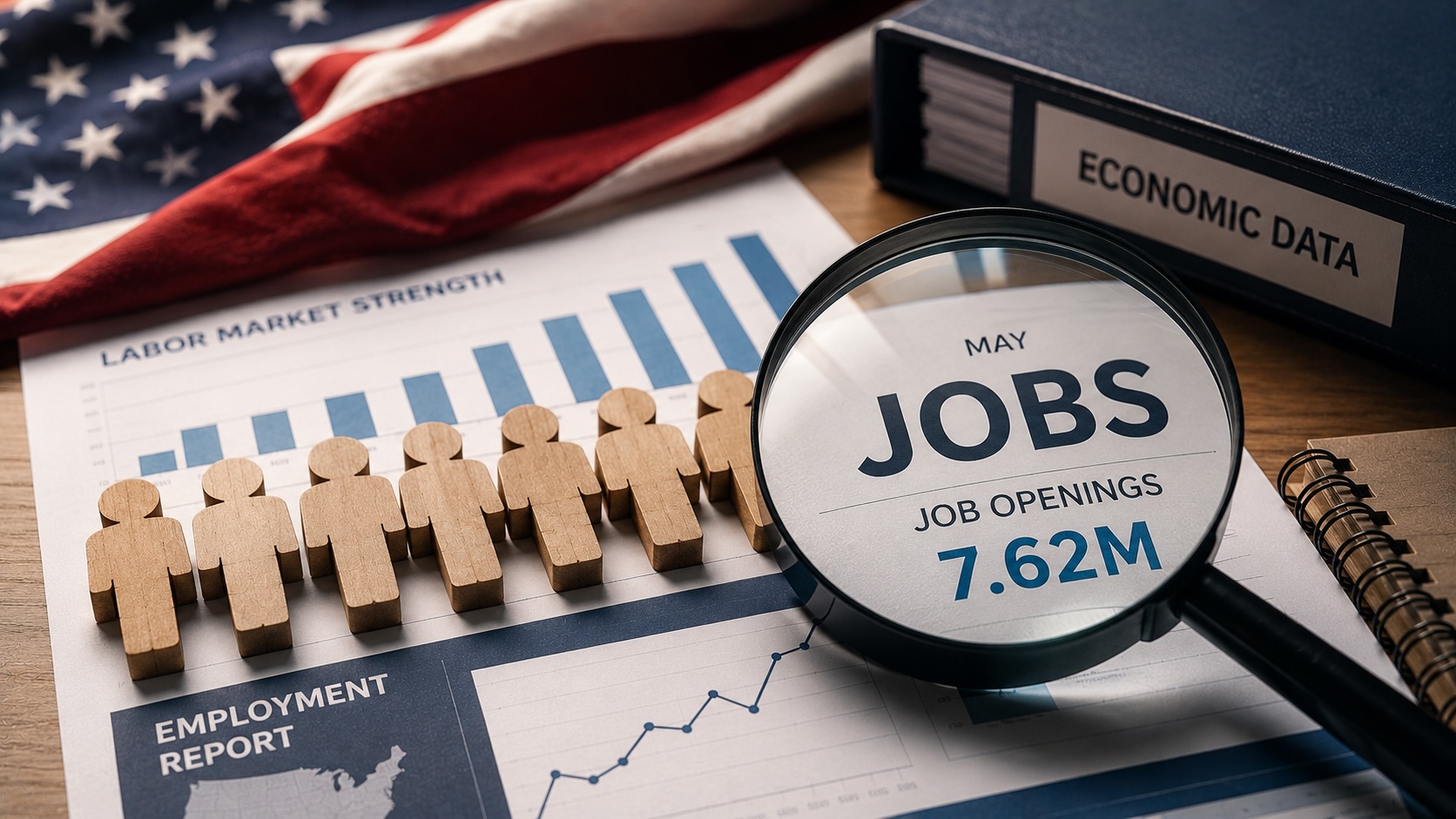
The U.S. added 172,000 jobs in May and job openings rose to 7.618 million; the S&P 500 fell as markets adjusted to a higher interest-rate outlook.
The U.S. economy added 172,000 jobs in May, the Bureau of Labor Statistics reported, and the unemployment rate held at 4.3 percent. The Labor Department’s JOLTS report showed job openings in April rose to 7.618 million.
The BLS revised payroll gains for April and March to 179,000 and 214,000, respectively. The three-month increase in payrolls is the largest in more than two years and is the longest consecutive monthly expansion in a year.
Private payroll data from ADP showed 122,000 private-sector jobs added in May, the strongest monthly private gain since January 2025. Education and Health Services added about 57,000 jobs. Employment gains were recorded across firms of different sizes, with the smallest employers (1–19 employees) and the largest (500+) contributing roughly 89,000 positions combined.
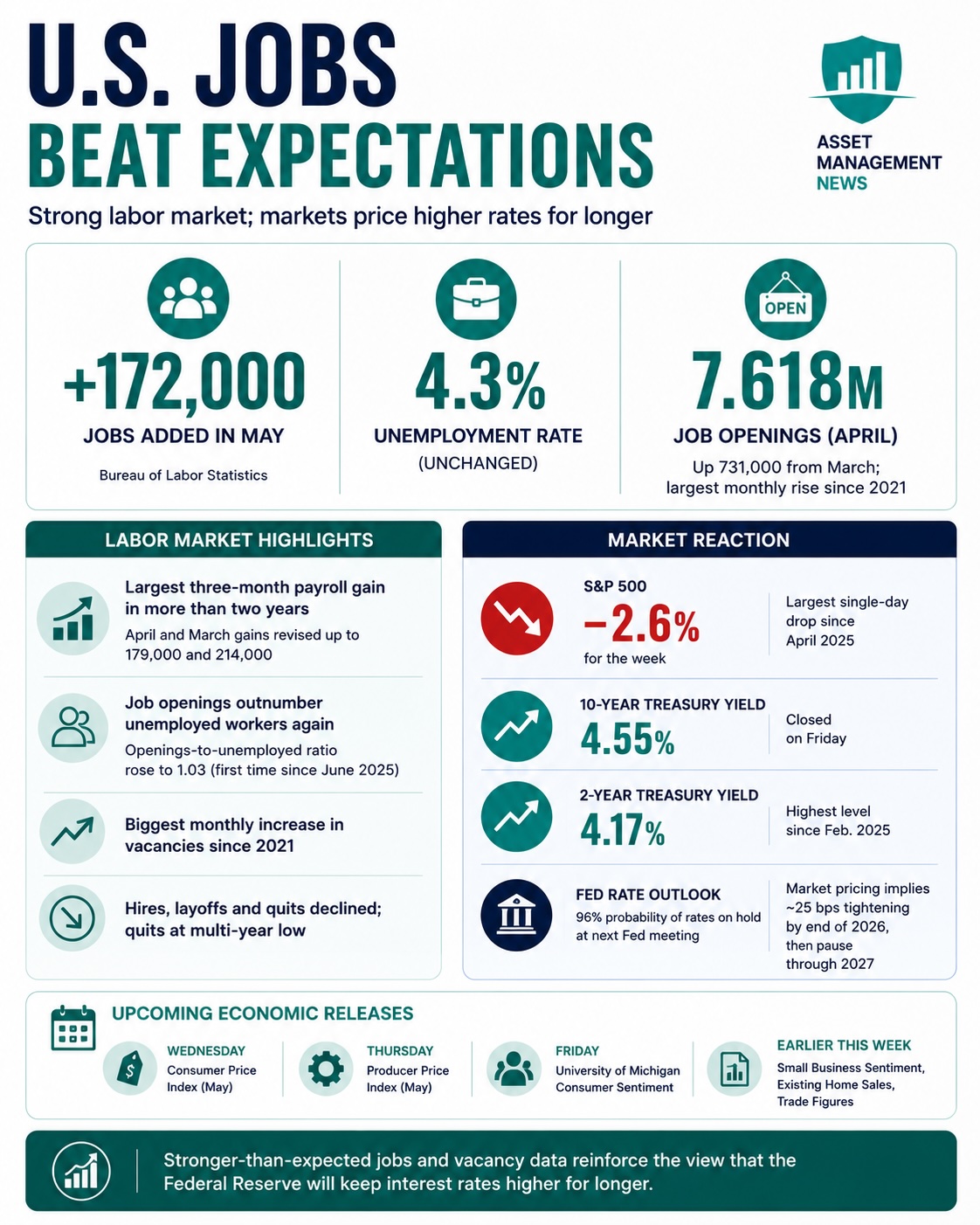
April’s JOLTS report recorded a 731,000 rise in vacancies, the biggest monthly increase since 2021. The ratio of job openings to unemployed workers rose to 1.03, the first time since last June that openings outnumbered job seekers. At the same time, hires, layoffs and quits all declined in April, and quits fell to a multi-year low.
Financial markets moved in response to the data. The S&P 500 posted its largest single-day drop since April 2025 on Friday and finished the week down about 2.6 percent; the SPDR S&P 500 ETF Trust declined roughly 2.5 percent over the week. The 10-year Treasury yield closed near 4.55 percent and the 2-year around 4.17 percent, the latter its highest level since February 2025.
The CME FedWatch Tool showed a 96 percent probability that the Federal Reserve will hold rates at its next meeting, with market pricing implying roughly a 25 basis point tightening by the end of 2026 followed by a pause through 2027.
Upcoming economic releases this week include the Consumer Price Index for May on Wednesday, producer prices on Thursday and the University of Michigan Consumer Sentiment Index on Friday, along with small-business sentiment, existing home sales and trade figures earlier in the week.
Tags
Articles by this author