Huang: Robotics could be South Korea’s next AI sector
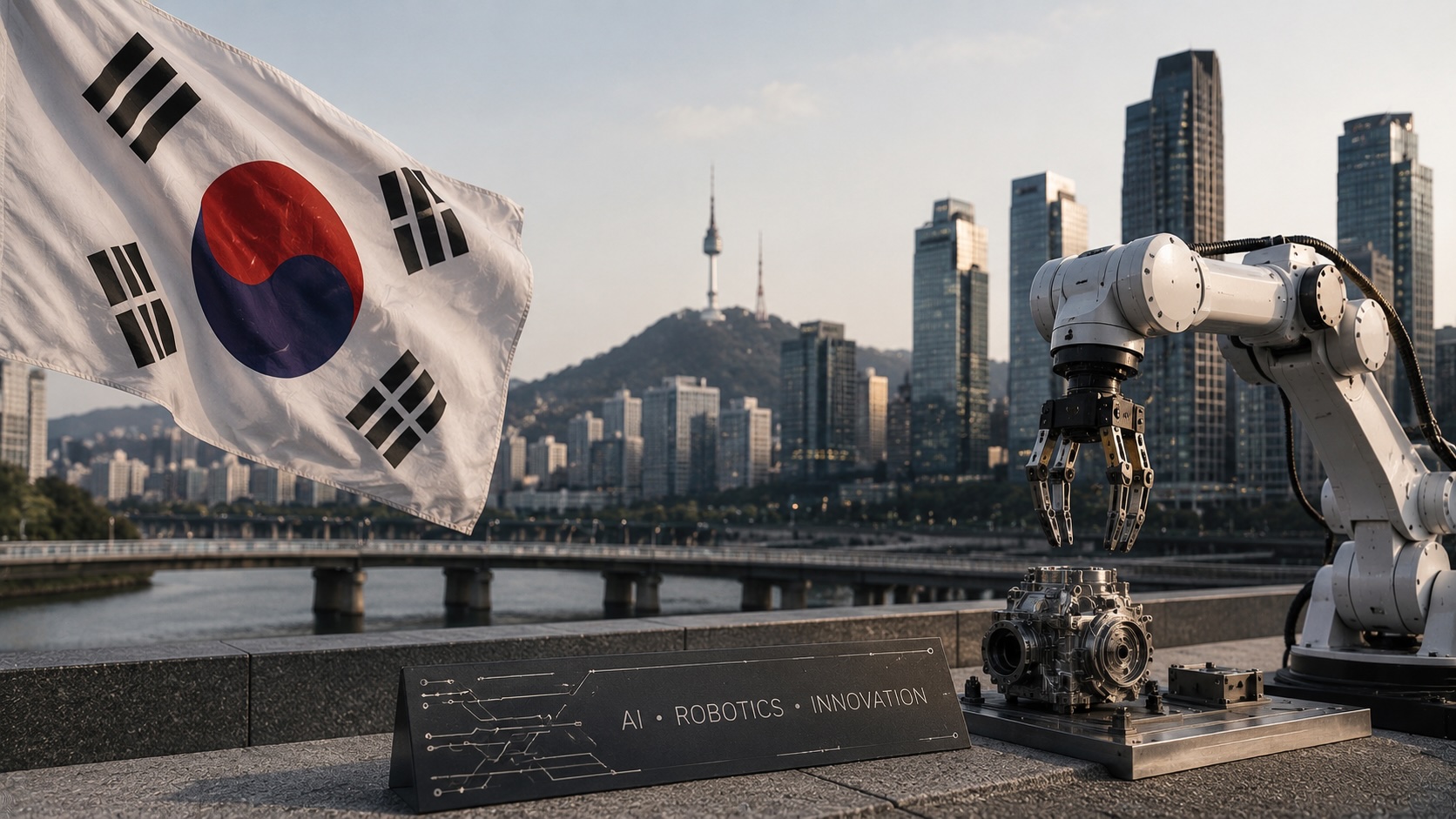
At Gimpo airport near Seoul, Nvidia CEO Jensen Huang told reporters robotics could become a major AI sector in South Korea, highlighting factory, logistics and auto applications.
Nvidia Chief Executive Jensen Huang made the remark to reporters on Friday after arriving at Gimpo airport near Seoul from Taiwan. He did not provide timelines, investment figures or name potential partners.
Huang described robotics as a next stage of artificial intelligence that moves capabilities from cloud-based models into physical machines that can sense and act in real-world settings. The first phase of recent AI growth focused on data centers and large language models; the next phase is expected to involve devices with sensors, real-time processing and decision-making.
At Nvidia, robotics covers industrial automation, autonomous systems, warehouse robots, factory equipment, simulation tools and automotive software. These applications require high-performance chips, AI models, software platforms and developer tools.
South Korea has large companies and engineering capacity in semiconductors, displays, consumer electronics, autos and batteries. Firms in carmaking, shipbuilding, electronics assembly and battery production already use automation and could be markets for AI-enabled machines.
Practical uses in the country include robotic assembly, inspection, materials handling and quality control on factory floors, automated warehouse systems and robotics work linked to autonomous driving and software-defined vehicle architectures.
Governments and companies in Asia are pursuing ways to add value to domestic industries through automation and AI beyond hosting data centers. Nvidia has been expanding its technology offerings to support machines and vehicles by combining chips, software and simulation tools for developers and manufacturers.
Investors and Korean technology groups will watch for follow-up announcements as companies assess how robotics could be applied across factories, logistics centers and the automotive supply chain.
Articles by this author