Trump signs two orders to accelerate quantum computing
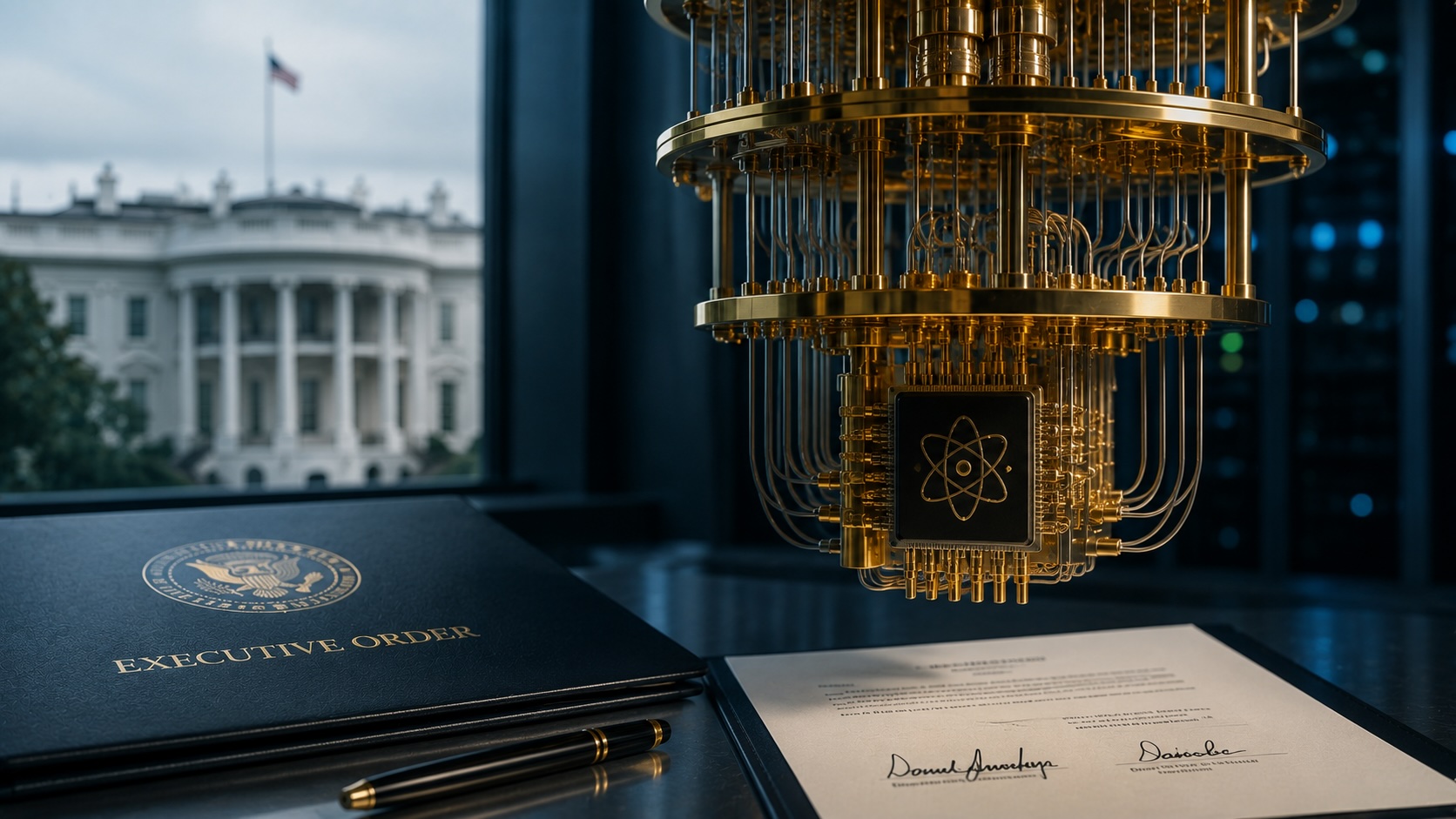
President Trump signed two executive orders on June 22, 2026, to speed federal quantum computing work and set deadlines for migration to post-quantum cryptography.
President Trump signed two executive orders on June 22, 2026, launching a government program to build a high-capability quantum computer and imposing timelines for federal migration to post-quantum cryptography. The actions aim to coordinate federal research, procurement and security work related to quantum technology.
The first order, titled “Ushering in the Next Frontier of Quantum Innovation,” creates the Quantum Computer for Application Development and Discovery Science effort, or QC-ADDS. The order directs the Department of Energy to deliver at least one quantum computer capable of transformative scientific calculations to a DOE national laboratory. The White House expects such a system could be in place by 2028. The Energy Department has 90 days to publish technical specifications that may include qubit counts, fidelity thresholds and target application classes.
The second order, “Securing the Nation Against Advanced Cryptographic Attacks,” sets binding federal deadlines for switching to post-quantum cryptography. Federal high-value systems must complete migration for key establishment by the end of 2030 and for digital signatures by the end of 2031. A pilot migration is required by the end of 2027. Proposed procurement changes would require federal contractors to meet the same 2030 deadline for key-establishment migration. The orders reference the National Institute of Standards and Technology’s finalized post-quantum algorithms ML-KEM, ML-DSA and SLH-DSA.
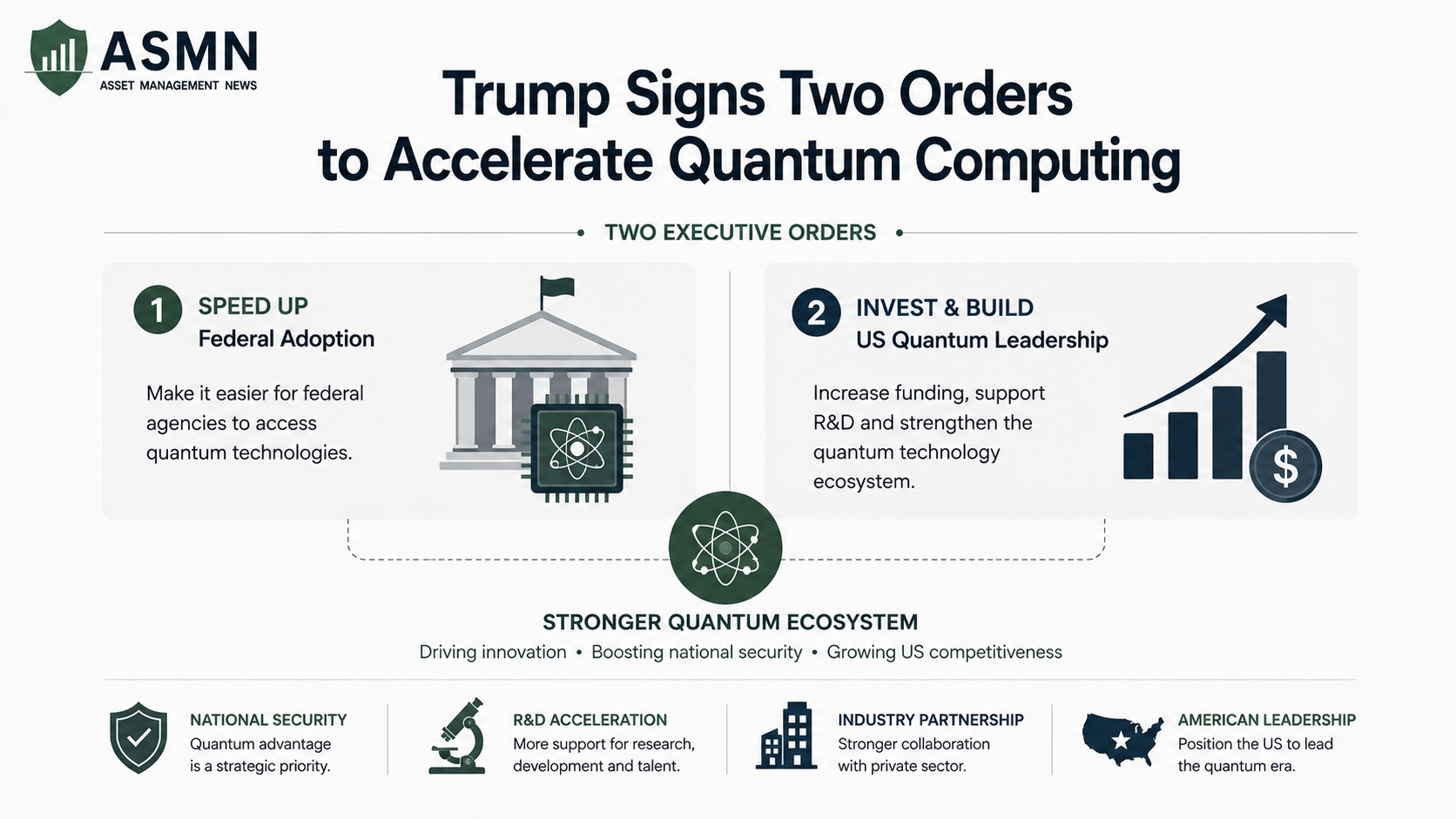
The actions follow a May 2026 Commerce Department announcement of $2 billion in CHIPS Act funding for quantum companies, including equity stakes in nine firms. Administration officials describe the funding and the orders as part of a coordinated effort to create government demand and procurement pathways for domestic quantum technology vendors.
Federal officials and researchers note that key engineering challenges remain. Technical issues include controlling error rates, maintaining qubit coherence and scaling systems without degrading performance. Executive orders do not change those physical or engineering constraints, though the orders establish a clearer procurement timetable and funding commitments that may influence vendor plans.
Private-sector technical results cited by officials include a published report on a 98-qubit trapped-ion processor with all-to-all connectivity and two-qubit gate fidelities averaging about 99.92 percent; the authors reported that the device operates beyond the classical simulation boundary for certain workloads. Separately, researchers reported a fully distributed three-node GHZ entanglement experiment connecting remote trapped-ion qubits with photonic links, achieving a GHZ fidelity above 0.84 and reporting closure of the detection loophole in tests of quantum correlations. Other companies have reported progress on neutral-atom platforms, photonic systems, superconducting qubits and advances related to topological qubit research.
The procurement deadlines and contractor requirements create a multi-year window for suppliers of post-quantum cryptography implementations. Industry advisers say the Energy Department’s forthcoming technical specifications for QC-ADDS will influence which hardware and software companies can meet government needs. At the signing ceremony, National Cyber Director Sean Cairncross called for balancing innovation and security as quantum capabilities advance.
Articles by this author