Fidelity: Active management targets gaps in bond indexes

At a TMX VettaFi webinar, Fidelity strategists said active fixed-income management can exploit concentration risks in the Bloomberg U.S. Aggregate and outlined FBND’s core-plus mandate.
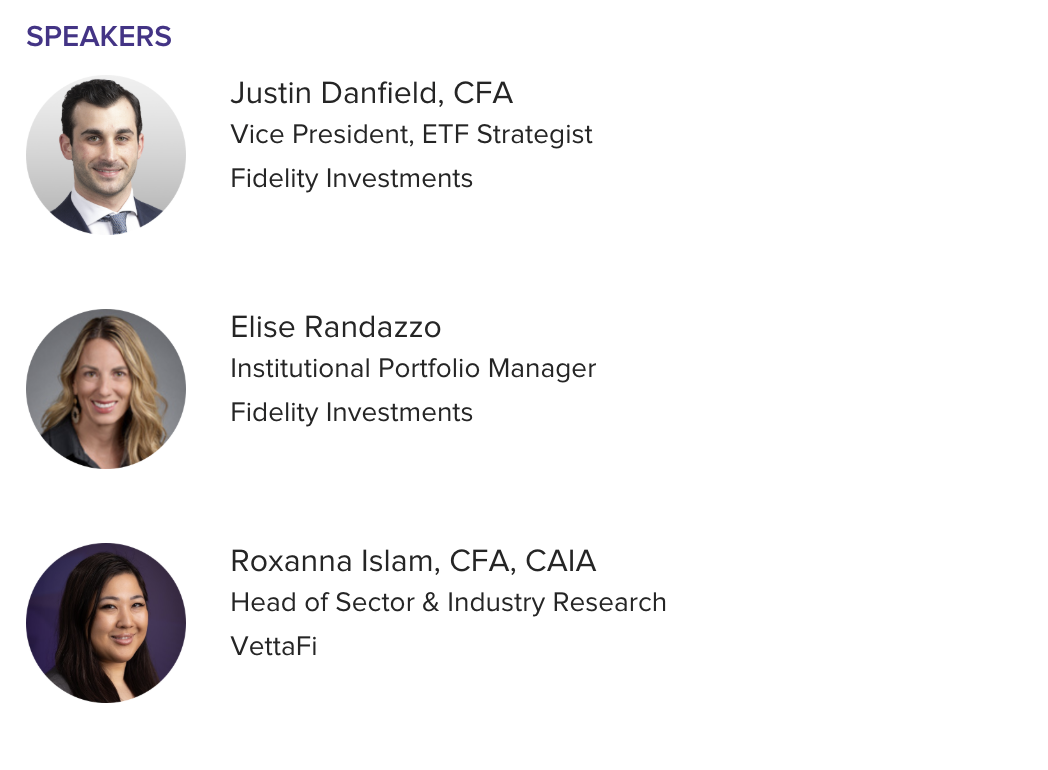
A recent TMX VettaFi webinar titled ‘A Fresh Look at Fixed Income’ featured Justin Danfield, an ETF strategist at Fidelity, and Elise Randazzo, an institutional portfolio manager at Fidelity, with Roxana Islam moderating.
The speakers described a fixed-income market with higher-for-longer interest rates, elevated absolute yields and credit spreads near cyclical lows.
They pointed to a structural issue in the Bloomberg U.S. Aggregate Bond Index (AGG): weighting by debt outstanding means the largest borrowers receive the largest index weights regardless of issuer fundamentals. Randazzo noted Treasuries rose from about 25% of the AGG before the 2008 financial crisis to nearly 50% today.
The AGG has an estimated market capitalization near $31 trillion and represents roughly half of the U.S. bond market, leaving broad segments outside the index, including high-yield corporate debt, leveraged loans, emerging-market debt and collateralized loan obligations.
Danfield highlighted the role of fixed-income ETFs in price discovery and described strong technical demand in recent primary issuance. He attributed elevated issuance in part to large technology companies funding investments tied to artificial intelligence and said new deals were frequently oversubscribed, supported by yield-seeking buyers and flows from passive products.
Panelists noted that while nominal yields are high by recent standards, credit spreads are unusually tight. They explained that narrow spreads create an asymmetric return profile, where potential spread widening could produce larger losses than the limited gains available from further compression.
Fidelity outlined a research-driven process that integrates equity and credit analysis. Randazzo said equity and credit analysts often meet with management teams together and that teams conduct thousands of company meetings annually to inform portfolio positioning.
As an example of an active option, Fidelity presented the Fidelity Total Bond ETF (FBND). The fund follows a core-plus mandate that maintains a foundation of higher-quality bonds while allowing up to 20% of assets to be placed in nonbenchmark sectors such as high-yield, loans and nonbenchmark structured credit.
Speakers listed ETF features that support investor use of fixed-income products, including intraday liquidity, diversification, tax efficiency, transparency and lower cost relative to some active funds, and linked those features to addressing concentration and coverage gaps in broad bond indices.
Articles by this author