Experts: Cassidy-Kaine sovereign fund could raise debt

Boston College researchers find the Cassidy-Kaine proposal to borrow $1.5 trillion to seed a 75-year sovereign wealth fund would likely not fix Social Security and could increase federal debt.
Boston College researchers examined the July 2025 proposal from Sens. Bill Cassidy and Tim Kaine to borrow $1.5 trillion to start a sovereign wealth fund that would invest in equities, bonds and other higher-return assets over 75 years. The researchers concluded the plan is unlikely to resolve Social Security’s projected shortfall and could leave the government with a large debt burden.
The senators proposed using a fiduciary standard and a diversified asset mix, arguing that higher returns could allow the fund to repay the Treasury after 75 years and then supplement payroll tax revenues. They compared the idea to state and private pension funds and the National Railroad Retirement Investment Trust as models for diversified investment management.
The Center for Retirement Research at Boston College, in a report by Anqi Chen, Alicia H. Munnell and Jean-Pierre Aubry, found that borrowing to invest at this scale “is more likely to leave the government with a big pile of debt in the 75th year, requiring large interest payments.” The authors warned that waiting to add equities until the trust faces depletion, currently projected for 2034, would probably fail to create a permanent fix.
The Boston College team recommended that if equities are used they be introduced early and only as part of a wider package that restores balance between revenues and benefits and rebuilds reserves. As one alternative, the researchers proposed an immediate tax increase or benefit cut followed by a 40% allocation to equities.
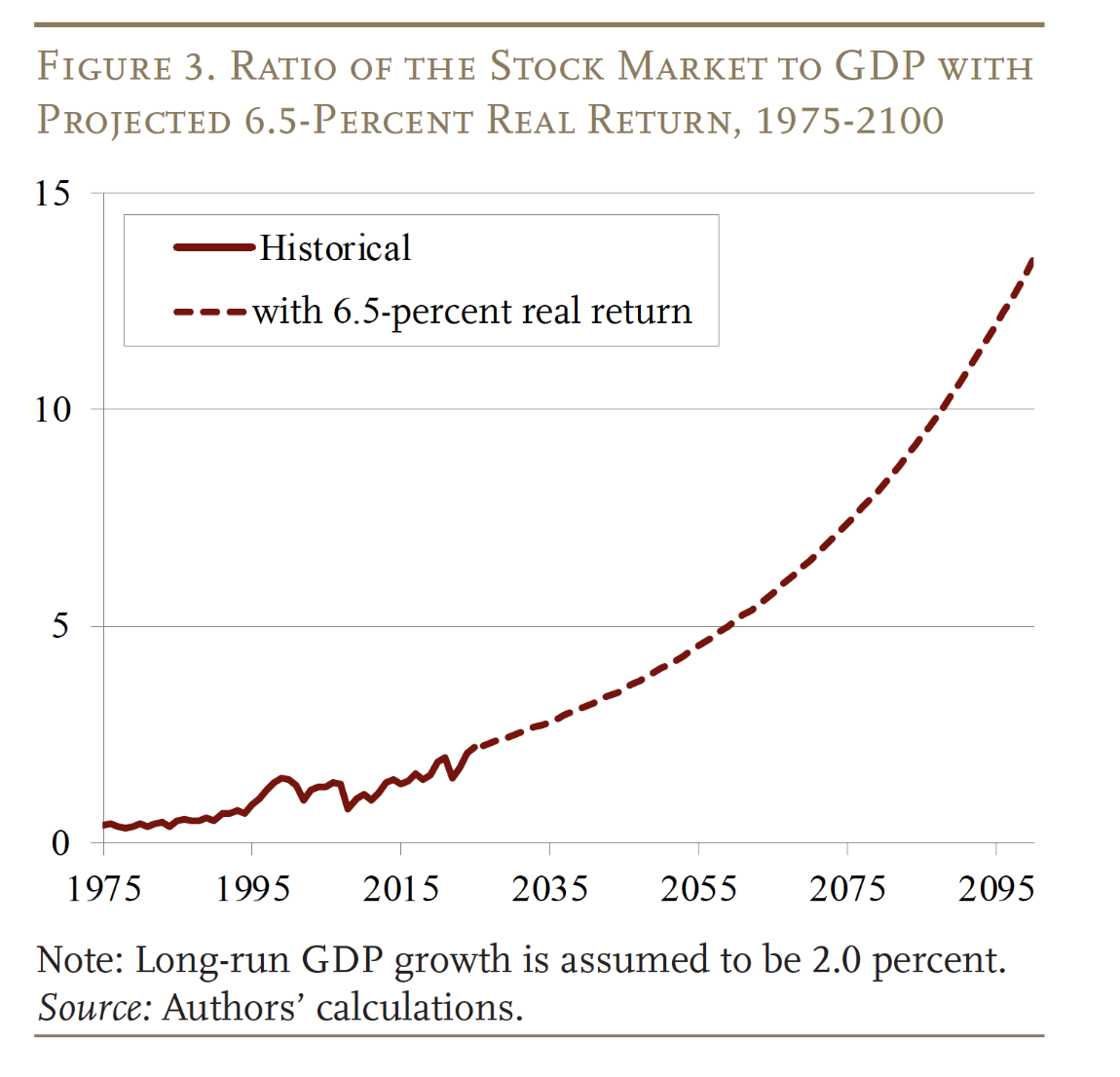
Private-sector and policy analysts raised concerns about borrowing to invest for Social Security. Charles “Chuck” Failla, founder of Sovereign Financial Group, called the approach “insanity,” arguing that borrowing money to invest for a program like Social Security exposes retirement benefits to market risk and treats the program like a market bet. Andrew G. Biggs of the American Enterprise Institute criticized the plan for increasing stock-market exposure and noted the possibility of the government owning a growing share of U.S. equities. Other observers pointed to the scale of borrowing required and the political difficulty of committing to a 75-year investment horizon.
Supporters of the proposal maintain that a fiduciary standard and diversified holdings could raise returns relative to the current trust, which primarily holds special-issue Treasury securities. Under the senators’ plan, higher returns would in theory allow repayment to the Treasury and later boosts to payroll tax revenues.
Federal projections show the Social Security trust funds may be unable to pay scheduled benefits in full beginning in 2034 without congressional action. The Cassidy-Kaine proposal targets that gap with a market-oriented approach; the Boston College report and several experts say investment gains alone would not substitute for immediate legislative changes to secure long-term solvency.
Alternatives offered by analysts include removing the payroll tax cap, adjusting the tax rate and introducing means-testing for future beneficiaries, while preserving benefits for current retirees. The Boston College report reiterates that equities could contribute only when paired with reforms that secure revenues or reduce benefits to rebuild reserves.
Tags
Articles by this author