Apple stock drops after Mac and iPad price hikes
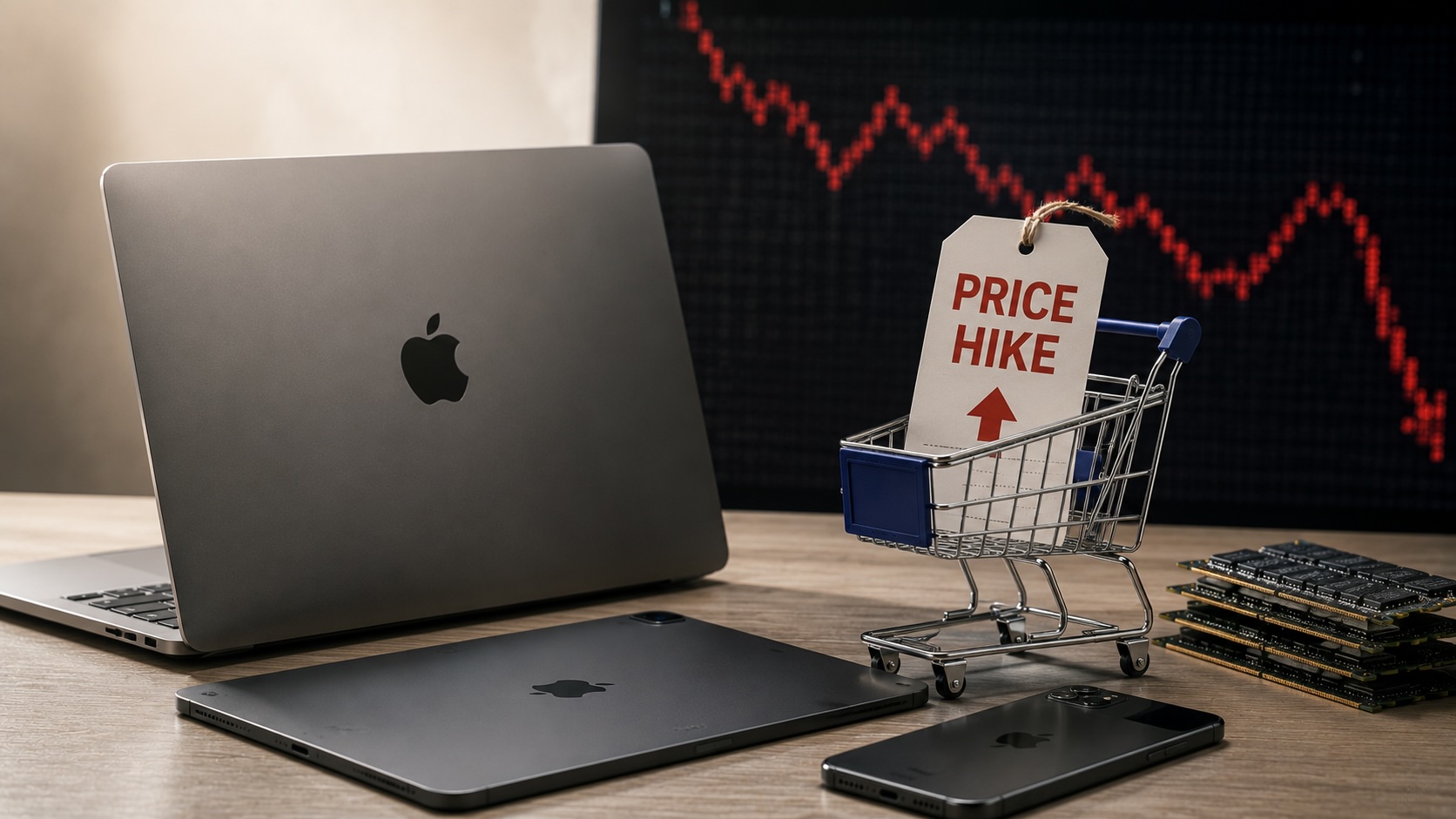
Apple shares fell about 4.9% after the company raised prices on several Mac and iPad models as memory and storage costs tied to AI demand pushed component expenses higher.
Apple shares fell roughly 4.9% after the company raised prices on several Mac and iPad models, blaming a sharp rise in memory and storage costs linked to booming demand from AI data centers.
Under the new pricing, the base MacBook Air rises by $200 to $1,299, the base MacBook Pro increases by $300 to $1,999, and the entry-level MacBook Neo goes up $100 to $699. iPad prices were also raised: the iPad Air is now $749, up $150, and the iPad Pro starts at $1,199, up $200. iPhone prices were left unchanged. Apple said it may make further adjustments if component costs remain elevated.
Apple described the consumer electronics industry as facing an “unprecedented challenge,” saying the rapid expansion of AI data centers has driven an extraordinary surge in demand for memory and storage. Chief Executive Tim Cook called the surge “a hundred-year flood,” adding he had not seen anything like it in more than four decades.
Industry research points to major increases in memory and storage pricing as chipmakers shift capacity to high-bandwidth memory used in AI servers and accelerators. One research firm found memory and storage prices have roughly quadrupled over the last three quarters as suppliers prioritize orders from AI-focused customers.
Memory suppliers including Micron, Samsung and SK Hynix have prioritized AI customers, limiting the supply available to consumer-device makers. A recent analysis from investment banks projects that DRAM and NAND could account for a much larger share of an iPhone’s bill of materials in coming years if current trends continue.
Apple said it has relied on existing inventories to help protect margins, and hardware gross margins expanded to 38.7% from 35.9% year over year in the most recent quarter. The company reported total quarterly profit of $29.6 billion. In April, Apple warned that rising memory costs would begin to pressure profitability by the end of June.
Apple has explored expanding its supplier base to include Chinese memory makers, but those options have faced scrutiny from U.S. policymakers over security and supply-chain concerns. Analysts say building new manufacturing capacity to relieve the shortage will take years, keeping memory prices elevated in the near term.
Company officials said the price changes were necessary given component cost trends and that they are working on solutions. Consumers and investors will be watching sales of Macs and iPads as Apple and its suppliers respond to the strained memory market.
Articles by this author