AI selloff deepens as Iran talks ease oil and gold

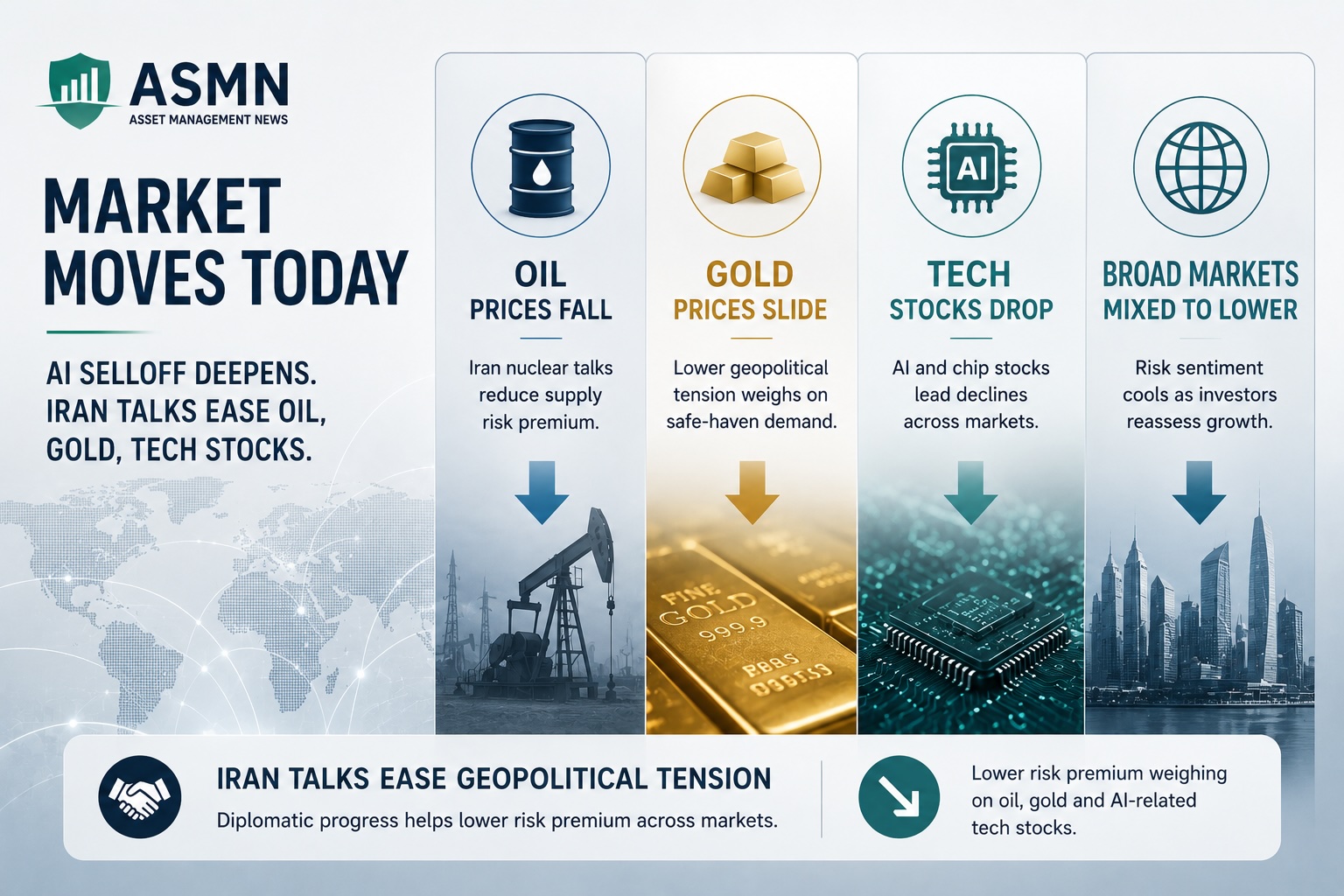
Global tech and chip stocks plunged on worries about AI spending and rising corporate debt. US-Iran talks eased Middle East supply fears and pushed oil and gold lower.
On Tuesday global technology and memory-chip stocks tumbled as investors reacted to concerns about heavy spending on artificial intelligence and growing corporate borrowing. The selloff affected markets in Asia, Europe and the United States, while easing in US-Iran diplomacy drove commodity prices lower.
Comments from US Vice President JD Vance that talks with Iran had “made meaningful progress” reduced fears of prolonged Middle East supply disruption. Brent crude for August delivery fell 1.57% to $76.68 a barrel and US West Texas Intermediate dipped 1.53% to $72.73. Spot gold dropped 1.47% to $4,122.99 an ounce, and US gold futures for August fell 1.4% to $4,144.45. Tim Waterer, chief market analyst at KCM Trade, noted the dollar’s strength amid expectations of further Federal Reserve rate increases.
Iran rejected characterizations that formal nuclear negotiations had begun. Mohammad Bagher Qalibaf, speaker of Iran’s parliament, told state media that control of the Strait of Hormuz would remain with Iran and expressed hope that passage through the strait could resume to support regional and global trade.
Technology and chip stocks led declines across markets. South Korea’s Kospi plunged nearly 10%, with memory-chip maker SK Hynix down more than 12%. Japan’s Nikkei 225 fell 3.55%, ending an eight-session winning streak. In Europe the pan‑European Stoxx 600 slipped about 1% and ASML lost roughly 5.2% in early trading.
US futures pointed to further losses on Wall Street: Nasdaq 100 futures fell 2.8%, S&P 500 futures dropped 1.4%, and Dow futures were lower. Major chip and tech names moved sharply in premarket trading-NVIDIA fell about 2.6%, Intel slid over 7%, Advanced Micro Devices lost 6%, and Marvell Technology tumbled 8%. Memory-related stocks also posted steep declines: Micron down 7%, SanDisk off around 8.6%, and Western Digital down 7%.
Market participants highlighted rising borrowing to fund AI infrastructure as a factor in the selloff. SpaceX shares fell 16.4% on Monday after the company outlined plans for a large bond sale. Ipek Ozkardeskaya, senior analyst at Swissquote, said the firm’s funding plans revived concerns about aggressive spending among technology companies. Analysts at Morgan Stanley estimate global AI-related borrowing could exceed $500 billion this year.
Expectations for higher interest rates also featured in trading. The CME FedWatch Tool showed traders assigning an 88% probability to a Fed rate increase in December, up from about 61% before last week’s Federal Reserve meeting. Higher rates raise the cost of financing large projects and can affect valuations in capital-intensive sectors.
Cryptocurrencies slipped as well. Bitcoin fell more than 3% to about $62,480 as markets digested mixed accounts of the US-Iran discussions. Jefferies economist Mohit Kumar observed that the US and Iran presented different views on the progress of talks.
With geopolitical risk easing, market attention turned to the scale of AI investment and the debt used to finance it, while traders monitored interest-rate expectations and their implications for corporate financing and valuations.
Articles by this author